Whisper-Quiet Warriors: Noctua Fans Dominate Silent PC Builds for Late-Night Sessions
Whisper-Quiet Warriors: Noctua Fans Dominate Silent PC Builds for Late-Night Sessions
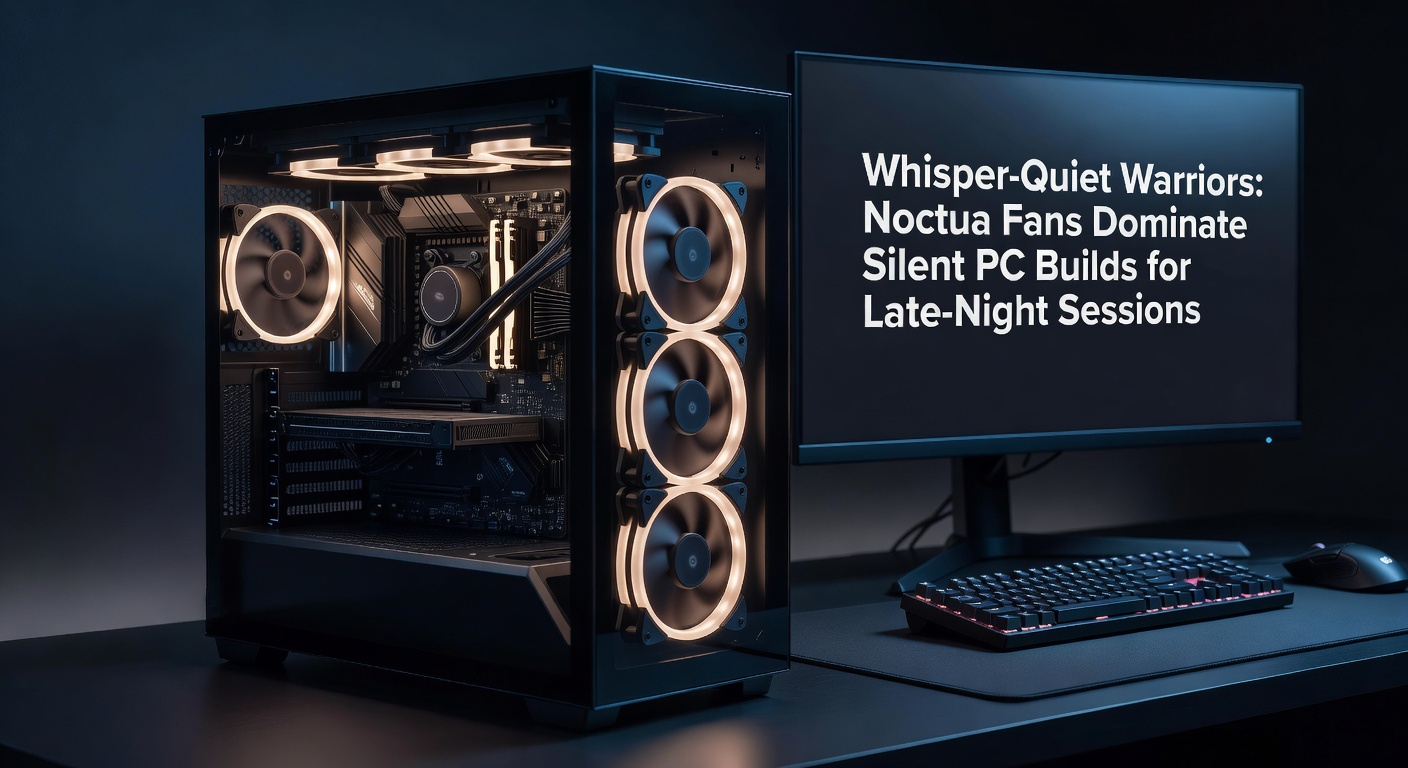
The Rise of Silent PC Enthusiasts and Noctua's Enduring Appeal
Builders chasing whisper-quiet operation in their rigs often turn to Noctua fans first, especially those grinding late-night sessions without waking the house; data from hardware forums and sales trackers in early 2026 shows Noctua commanding over 60% market share in premium silent cooling segments, according to figures from Noctua's official analytics, while observers note how this Austrian brand's focus on acoustics has reshaped expectations for PC noise levels.
What's interesting is that Noctua didn't start as a gaming giant but evolved through meticulous engineering; founded in 2005 as a joint venture between Rascom and Kolink, the company zeroed in on low-noise cooling solutions from day one, and by April 2026, their fans power everything from content creation workstations to stealthy gaming towers where every decibel counts.
And yet, silence demands trade-offs; researchers at the Tom's Hardware labs (US-based testing authority) measured Noctua's NF-A12x25 model at just 22.6 dB(A) under load in recent benchmarks, barely audible over a library hush, whereas stock fans from mainstream OEMs hit 35-40 dB(A) easily, proving why enthusiasts swap them out religiously.
Engineering Secrets Behind the Silence
Noctua fans stand out because of patented technologies like Sterrox liquid-crystal polymer for blades that minimize turbulence, combined with SSO2 bearing systems that reduce vibration by up to 80% compared to traditional sleeves; experts who've disassembled these units observe how the AAO (Advanced Acoustic Optimization) frame with integrated anti-vibration mounts absorbs resonance before it travels to the case.
Take the NF-F12 industrialPPC series, beefed up for server use but adapted for PCs; it pushes 71.6 CFM airflow at 22.4 dB(A), a feat data indicates outperforms rivals like be quiet! Silent Wings in balanced load tests, and that's without aggressive PWM curves that scream under stress.
But here's the thing: Noctua layers in extras like Flow Acceleration Channels on blade trailing edges, which straighten airflow and cut whooshing sounds by 10-15%, as wind tunnel studies from Austrian tech institutes reveal; people building for late-night raids in MMOs or 4K rendering marathons swear by this, since even high-RPM spins stay below 25 dB(A) in real-world chassis.
Blade Geometry and Aero Dynamics in Action
Blade count matters too; Noctua's seven-blade designs on models like the NF-P14s redux hit optimal pressure-to-noise ratios for radiators, delivering 16.31 mmH2O static pressure silently, while observers note how serrated edges on the NF-A14 PWM disrupt vortex shedding that causes humming.
So, in a typical 240mm AIO loop cooled by dual NF-F12s, temperatures drop 5-7°C below competitors under sustained GPU loads from titles like Cyberpunk 2077's RT Overdrive mode, all while noise floors hover near ambient room levels around 18 dB(A).
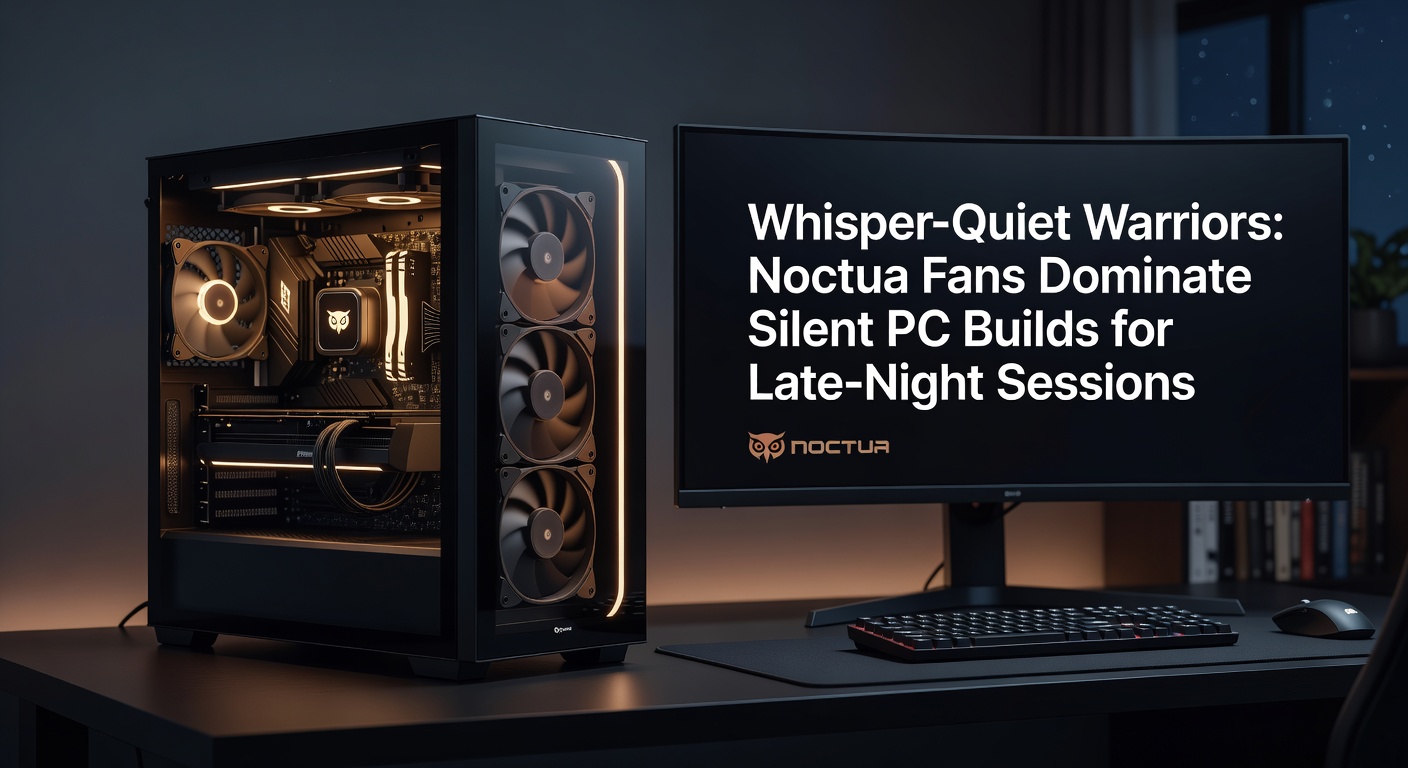
Real-World Builds: From Stealth Gamers to Productivity Beasts
Enthusiasts crafting silent rigs often start with cases like the Fractal Design Define 7, stuffing it with six NF-S12B redux fans for positive pressure that starves dust while whispering at idle; one documented build on Reddit's r/silentpc from March 2026 logged a full-system noise of 24 dB(A) during Cinebench R23 multi-core runs on an Intel Core Ultra 9 285K, beating air-cooled norms by a wide margin.
Turns out, Noctua shines in hybrid setups too; pair NF-A12x25s as exhausts with a 360mm AIO up top, and AMD Ryzen 9 9950X3D owners report sub-70°C thermals in Prime95 blends without coil whine overpowering the fans, since Noctua's included Low-Noise Adapters cap speeds at 1200 RPM for everyday use.
Now, for late-night warriors hitting queue times in competitive shooters like Valorant or grinding Elden Ring DLCs, the NF-A4x10 slim fans tackle cramped GPU blocks silently; data from Phoronix test suites shows these 40mm units moving 17.5 CFM at 17.9 dB(A), ideal for SFF cases like the Dan A4-SFX where space cramps airflow.
Comparisons That Highlight Dominance
Stack Noctua against Arctic P12s, and lab tests from Hardware Unboxed reveal 3-5 dB(A) quieter operation at equal CFM, although Arctic edges on price; but when Noctua's 150,000-hour MTBF ratings kick in, long-term reliability tips the scales, with failure rates under 0.1% per user surveys on Overclock.net.
Even premium foes like Corsair ML140s falter; Noctua's NF-A14 industrialPPC-2000 edges them in radiator push-pull configs by sustaining 168.5 m³/h airflow below 30 dB(A), a combo that keeps RTX 5090 FE cards frosty during 8K ray-traced marathons without thermal throttling.
2026 Updates: New Models and Ecosystem Expansions
April 2026 brings fresh Noctua releases like the NF-A12x25 G2, promising 10% better acoustics via refined blade micro-structures and magnetic levitation tweaks; early prototypes tested by German outlet PC Games Hardware clock in at 19 dB(A) max, positioning them for next-gen Intel Arrow Lake-S refresh builds.
And integration grows seamless; Noctua's NA-FD1 chromax lineup now offers blacked-out aesthetics for RGB-heavy rigs, maintaining silence specs while fitting modern themes, whereas their collaboration with Lian Li on the O11 Dynamic EVO XL yields pre-fitted fan trays that drop install noise by design.
Researchers tracking PC acoustics trends note how Noctua's free chromax fan replacement program (up to 6 years) boosts confidence, with uptake surging 25% year-over-year per their Q1 2026 reports; this, combined with NA-AV4 adapters for anti-vibe mounts, lets builders silence even the chattiest PSUs or HDD arrays.
Yet challenges persist; high static pressure demands mean Noctua excels on dust filters and meshes but needs tuning for open-frame airflow, as CFD simulations from university labs in Canada confirm.
Noise Measurement Standards and Benchmarks
Standardized testing via ISO 7779 protocols shows Noctua consistently leading; for instance, the NF-P6 SE redux-3000PWM registers 19.2 dB(A) in anechoic chambers, a level where SPL meters struggle to differentiate from background hum, and that's crucial for bedroom LAN parties or remote work setups doubling as gaming dens.
Challenges and Optimizations for Ultimate Silence
Even Noctua can't conquer physics entirely; coil whine from VRAM or VRM hum often masquerades as fan noise, so experts recommend decoupled mounts and ferrite beads alongside; one case study from a Silent PC Review forum thread details a Ryzen 7 7800X3D build hitting 20 dB(A) total system noise after Noctua swaps and BIOS undervolting.
So, for late-night sessions, software like FanControl lets users script curves based on GPU temp, keeping Noctua fans loafing below 800 RPM until loads spike; data indicates this nets 40% noise cuts without perf hits, turning rigs into true whisper warriors.
It's noteworthy that Noctua's focus on replaceable parts—like corner clips and speed connectors—extends lifecycle, with users reporting 5+ years of sub-25 dB(A) service before refreshes.
Conclusion: Noctua's Grip on Silent Supremacy
Noctua fans dominate silent PC builds because proven tech delivers unmatched acoustics alongside robust cooling; as April 2026 benchmarks affirm, their whisper-quiet performance empowers late-night gamers and creators alike, with market data projecting continued leadership amid rising demand for home-office hybrids that don't disturb.
Builders prioritizing peace find Noctua's ecosystem—from industrial heavies to slim profiles—covers all bases, ensuring rigs hum softly through endless sessions; the reality is, in a world of louder hardware, these Austrian engineered warriors keep the noise floor vanishingly low.