Uncovering the Engineering Behind Adaptive Refresh Rate Technologies in Gaming Displays
Mara Baumann · Aug 2, 2026
Uncovering the Engineering Behind Adaptive Refresh Rate Technologies in Gaming Displays
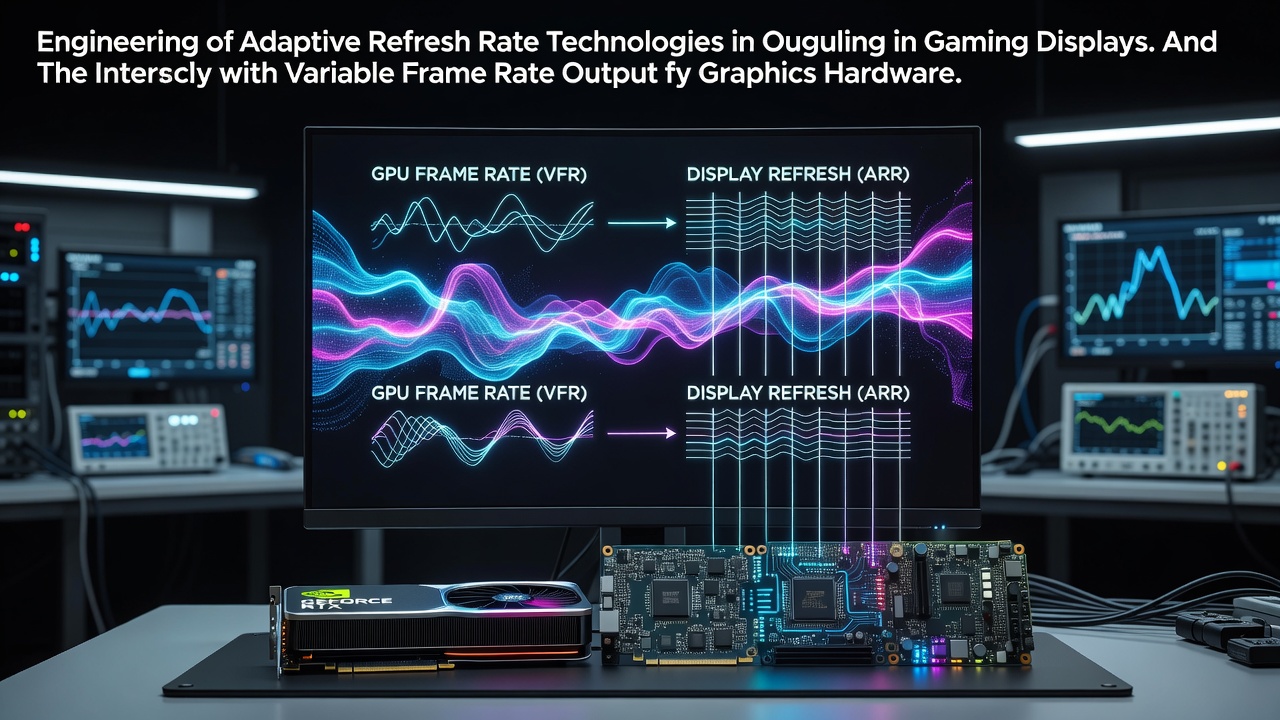
Adaptive refresh rate technologies have become central to gaming displays since their introduction in the mid-2010s, allowing screens to adjust their refresh rates dynamically in response to variable frame rate outputs from graphics hardware. Engineers at companies like NVIDIA and AMD developed proprietary and open standards such as G-Sync and FreeSync to eliminate screen tearing and stuttering that occur when frame rates fluctuate. These systems work by synchronizing the display's refresh cycle with the GPU's rendering output, and data from industry reports shows widespread adoption in monitors and laptops by August 2026.
Core Mechanisms of Adaptive Synchronization
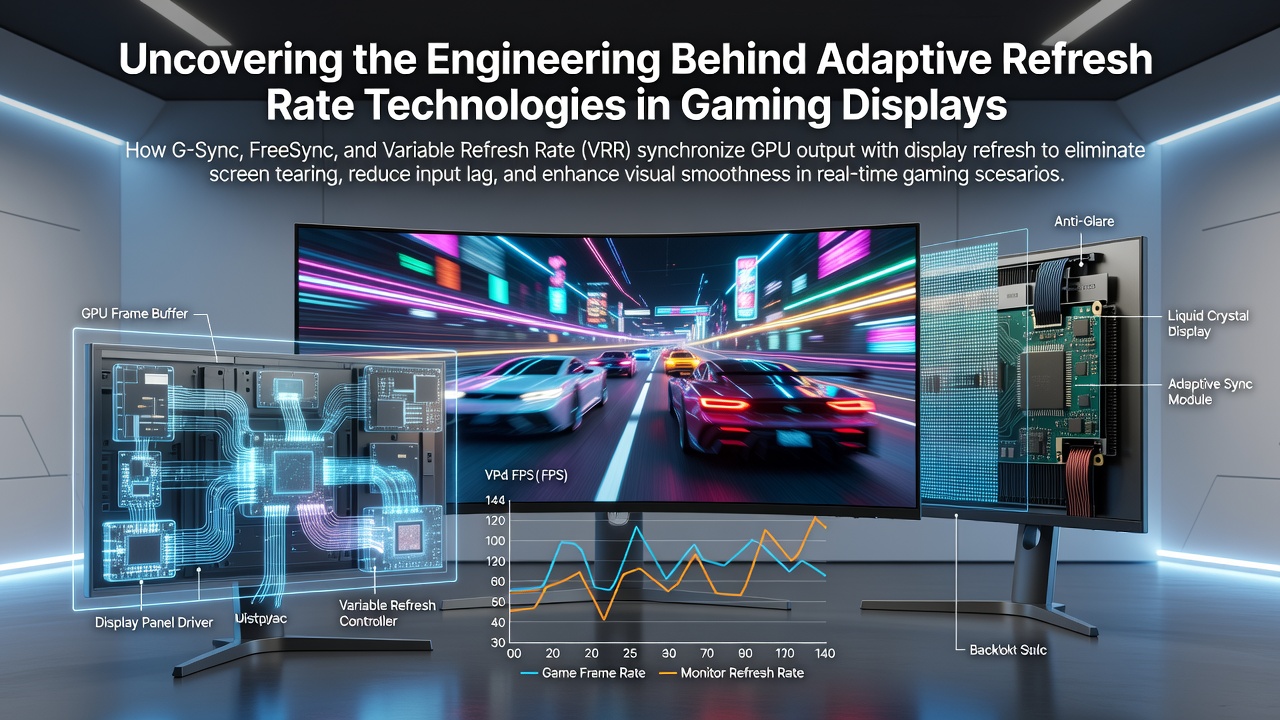
At the hardware level, adaptive sync relies on variable refresh rate protocols embedded in display interfaces like DisplayPort and HDMI, where the monitor receives timing signals from the graphics card and adjusts its vertical blanking interval accordingly. Researchers at VESA have documented how Adaptive-Sync extensions enable panels to range from 48Hz up to 144Hz or higher without fixed intervals, and this interaction prevents the mismatch between a GPU producing frames at inconsistent intervals and a display locked to a constant refresh rate. Engineers integrate scaler chips and timing controllers that monitor incoming frame data in real time, while firmware algorithms calculate the precise moment to refresh the panel based on the last received frame.
Interaction Between Graphics Hardware and Display Panels
Graphics processing units output frames at variable rates depending on scene complexity, and adaptive displays respond by stretching or compressing the refresh window to match those rates exactly. When a GPU renders at 60 frames per second, the monitor refreshes at 60Hz; when the output drops to 45 frames, the panel shifts to 45Hz, and this handshake occurs through embedded metadata packets sent over teh cable. Studies from display manufacturers indicate that the process involves low-latency communication protocols where the GPU signals its readiness, allowing the display to avoid tearing artifacts that would otherwise appear from unsynchronized outputs. In systems using HDMI Forum specifications, additional features like Quick Frame Transport further reduce delays during these transitions.
Engineering Components and Signal Processing
Behind the scenes, timing controllers use phase-locked loops and buffer management circuits to handle frame delivery variations, and these components ensure that pixels update only after complete frames arrive from the graphics hardware. Engineers incorporate overdrive circuitry to compensate for pixel response times that change with refresh rate shifts, preventing ghosting or smearing during rapid adjustments. Data from technical evaluations reveals that power delivery systems in modern panels scale voltage dynamically with refresh rate changes, which helps maintain efficiency while supporting the full range of variable frame outputs. Observers note that firmware updates in August 2026 have refined these algorithms to support even lower minimum refresh rates down to 24Hz for cinematic content.
Standards Evolution and Hardware Compatibility
Open standards such as VESA Adaptive-Sync and HDMI Forum VRR have expanded compatibility across vendors, whereas proprietary solutions require specific hardware modules like G-Sync modules in certain premium displays. Graphics hardware from multiple manufacturers now includes support for both open and closed ecosystems, and certification programs verify that panels meet performance thresholds for tear-free operation across frame rate ranges. Engineers have addressed compatibility challenges by implementing fallback modes that revert to fixed refresh when variable output falls outside supported bounds, and recent interoperability tests conducted across regions confirm smoother handoffs between devices from different suppliers.
Performance Metrics and Testing Protocols
Industry organizations track metrics including refresh rate variance tolerance and input lag under variable conditions, with figures showing average latency reductions of 10 to 20 milliseconds compared to fixed-refresh setups. Testing facilities measure frame time consistency using high-speed cameras and specialized capture hardware, revealing how adaptive systems maintain visual coherence even when graphics outputs fluctuate between 30 and 120 frames per second. Researchers continue to refine these protocols, incorporating additional data channels for predictive frame timing that anticipates GPU output patterns based on workload analysis.
Conclusion
Adaptive refresh rate engineering continues to advance through tighter integration between graphics hardware outputs and display synchronization circuits, supported by evolving interface standards and component-level optimizations. As of August 2026, these technologies enable consistent visual performance across diverse gaming environments by matching panel behavior directly to variable frame delivery patterns. Further developments in signal processing and firmware are expected to expand the supported frame rate ranges while maintaining compatibility across hardware platforms.