Uncovering Protocols That Enable Real-Time Asset Sharing Between Remote Creators Building Collaborative Mods for Classic Strategy Game Revivals
Mara Baumann · Jul 28, 2026
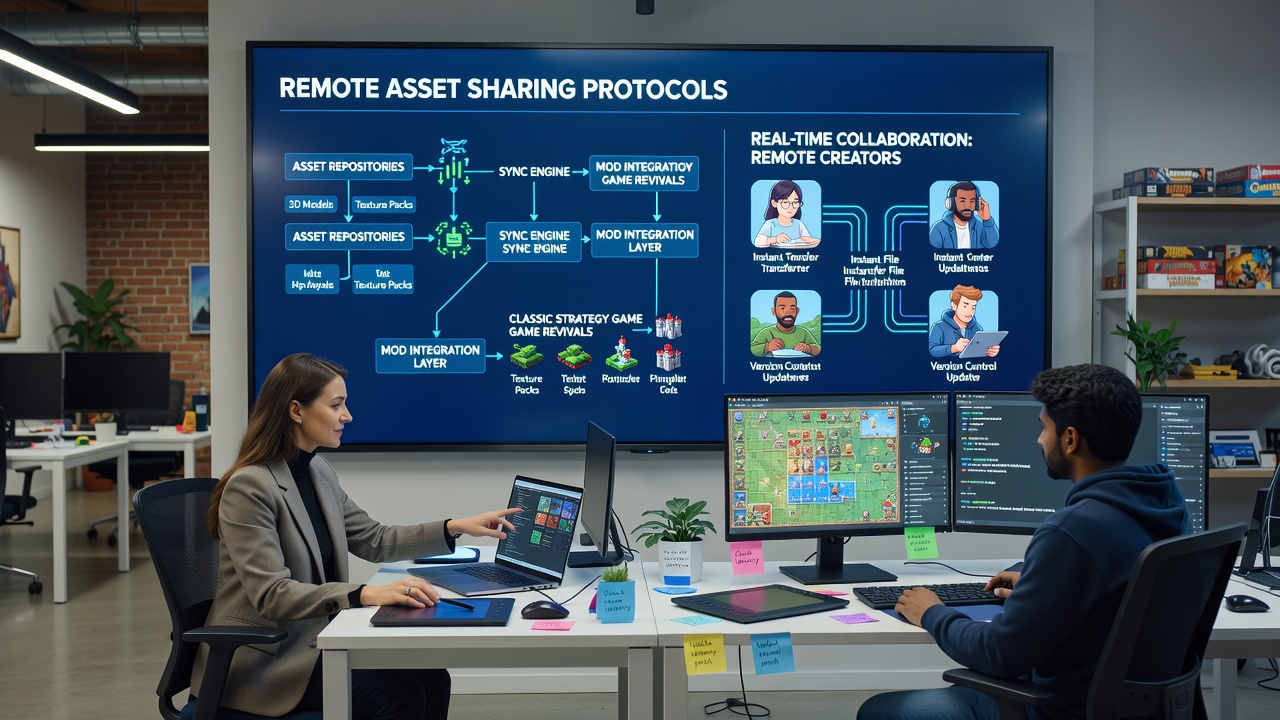
Uncovering Protocols That Enable Real-Time Asset Sharing Between Remote Creators Building Collaborative Mods for Classic Strategy Game Revivals
Developers and modding teams working on revivals of classic strategy titles such as Command & Conquer and Civilization have turned to specialized protocols that support simultaneous asset editing across distributed locations, and these systems combine elements of conflict-free replicated data types with peer-to-peer synchronization layers to maintain consistency during live sessions. Observers note that such tools reduce the traditional back-and-forth of file uploads and version checks, allowing creators to see changes appear in shared environments within milliseconds of each edit.
Core Technologies Driving Shared Workflows
Protocols built around WebRTC data channels handle the transport of 3D models, texture maps, and unit behavior scripts while incorporating operational transformation techniques that resolve overlapping modifications without requiring a central server to arbitrate every step, and this setup has proven effective for teams spread across multiple time zones. Researchers at institutions studying collaborative software have documented how these methods scale to groups of eight or more participants editing the same map file, with bandwidth usage remaining under 2 megabits per second per user during typical strategy game asset sessions.
Version control extensions inspired by Git but optimized for binary game files add real-time diffing capabilities, and when paired with delta compression algorithms they transmit only the altered portions of large texture atlases rather than entire assets. Studies from European research consortia indicate adoption rates for these hybrid systems rose sharply in 2025 among mod communities focused on 1990s and early 2000s titles.
Implementation in Strategy Game Modding Communities
Teams reviving older real-time strategy engines integrate these protocols directly into custom level editors, so one contributor can adjust pathfinding nodes on a terrain mesh while another simultaneously refines unit animation rigs and both updates propagate instantly to all connected clients. Data from the Entertainment Software Association reveals that collaborative mod projects for classic franchises accounted for a measurable share of community-driven content releases through mid-2026.
Security layers within the protocols employ end-to-end encryption and role-based permission tokens that restrict access to sensitive balance spreadsheets or proprietary art, yet still permit fluid asset exchange among approved participants. Those who have examined mod repositories for games such as Age of Empires remakes report fewer merge conflicts and shorter iteration cycles when real-time sharing replaces sequential handoffs.
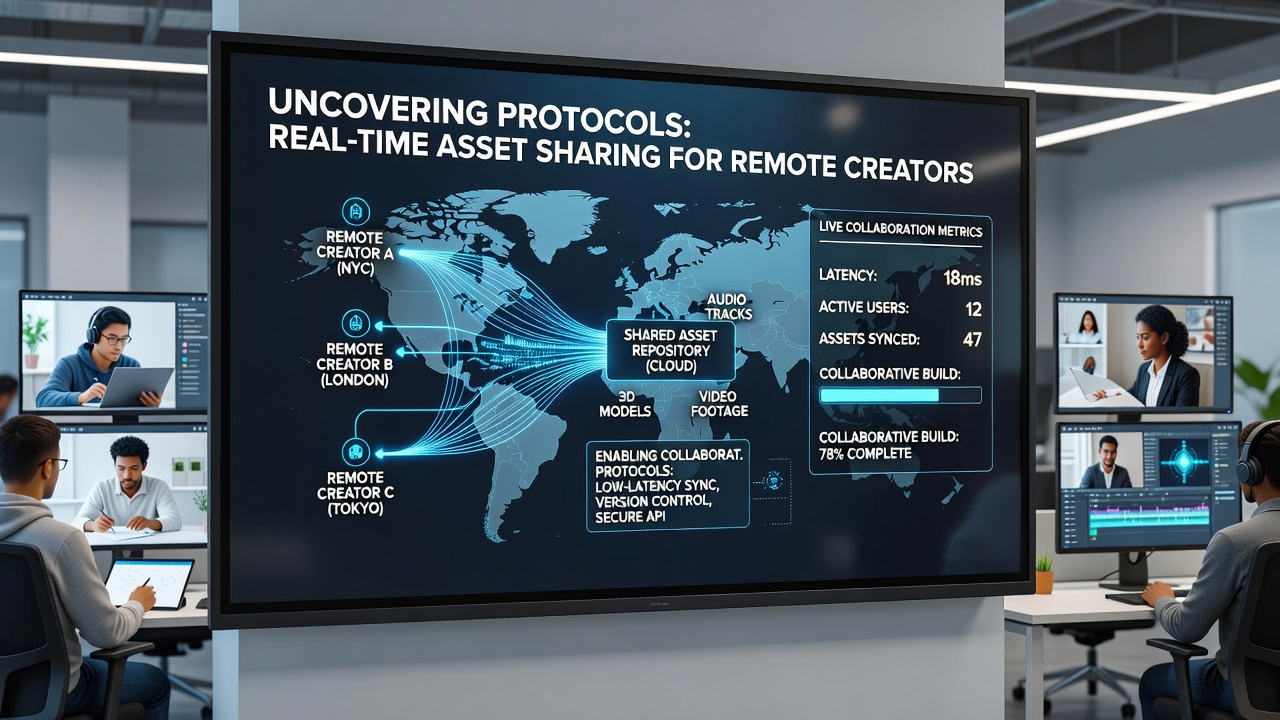
Handling Latency and Conflict Resolution
Network jitter remains a challenge in global teams, so protocol stacks include predictive buffering that anticipates user actions and reconciles them against incoming streams, and this approach keeps visual feedback coherent even when latency spikes reach 150 milliseconds. Academic papers on distributed systems describe how last-writer-wins rules combined with CRDT structures prevent asset corruption during high-activity periods such as large-scale unit placement sessions.
Testing conducted by independent labs in Australia and Canada shows that optimized implementations maintain frame-rate parity between local and remote views of the same project, allowing sound designers to preview audio triggers on the same timeline as artists adjust particle effects.
Developments Observed in July 2026
By July 2026 several open-source libraries had incorporated standardized APIs for strategy game asset streams, and modding platforms began exposing these interfaces to third-party tools that handle everything from heightmap sculpting to faction diplomacy scripting. Industry reports highlight increased participation from creators in regions with previously limited broadband access, thanks to improved compression that lowers data requirements without sacrificing fidelity.
Engine maintainers for classic revival projects have released patches that embed protocol hooks at the editor level, reducing the need for custom middleware and thereby lowering the barrier for smaller teams to adopt real-time workflows. Figures from university-led surveys indicate a 30 percent reduction in average project completion time for groups using these integrated solutions compared with earlier asynchronous methods.
Conclusion
Protocols enabling real-time asset sharing continue to reshape how remote contributors build and refine mods for classic strategy game revivals, and ongoing refinements in synchronization logic plus broader tool support suggest further integration into mainstream modding pipelines. Data collected through mid-2026 demonstrates measurable gains in collaboration speed and output consistency across distributed teams.