The Unexpected Connection Between 5G Rollout and the Evolution of Location-Based Mobile Gaming Strategies in Urban Environments
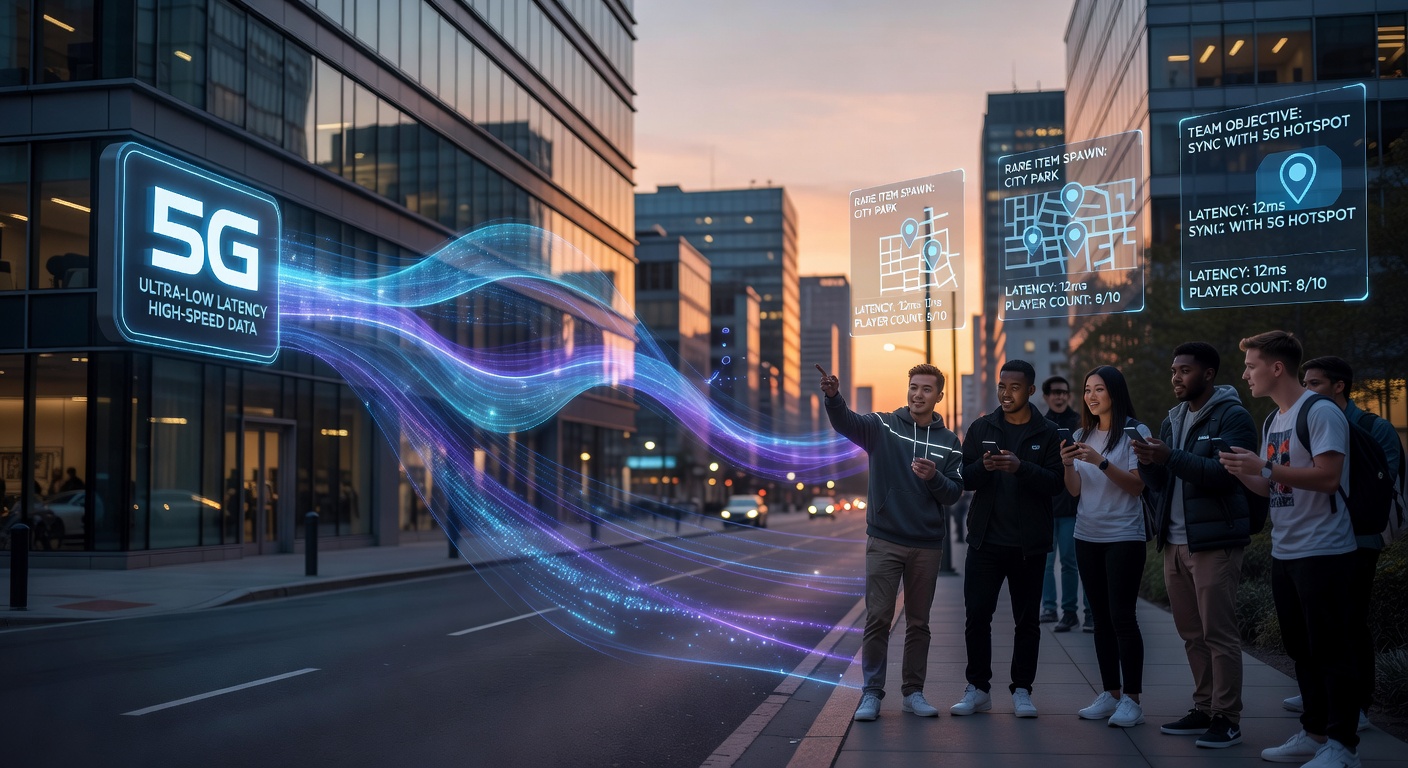
5G networks have expanded rapidly across major cities since their initial deployments, delivering lower latency and higher bandwidth that directly support real-time location tracking in mobile games; this infrastructure shift coincides with changes in how developers design experiences that rely on precise player positioning within dense urban grids. Data from industry analyses indicate that urban areas saw 5G coverage reach over 70 percent of populated zones in many regions by early 2025, creating conditions where games can process geolocation data at speeds previously limited by 4G constraints.
5G Infrastructure Expansion in Cities
Rollouts coordinated by telecommunications providers have prioritized metropolitan centers because population density supports the business case for small-cell installations that boost signal reliability. According to the GSMA 5G deployment reports, these networks handle simultaneous connections from thousands of devices per square kilometer, a capability that aligns with the demands of location-based titles where multiple users interact in shared physical spaces. Cities in North America and Europe completed significant portions of their 5G upgrades ahead of schedule, with additional spectrum allocations finalized in late 2025.
Engineers note that the reduced lag times, often under 10 milliseconds, allow games to update player positions without the delays that once disrupted coordinated events such as virtual item collections or team-based challenges. Government spectrum agencies in the United States and Australia have documented how these technical improvements extend to applications beyond communication, including entertainment services that depend on continuous data streams from mobile devices.
Changes in Location-Based Game Design
Early location-based games operated with coarse GPS accuracy that confined activities to broad areas, yet newer titles incorporate augmented reality overlays that require stable high-speed links to render digital elements aligned with real-world landmarks. Research from mobile technology studies shows that developers began testing features such as dynamic spawning of in-game objects tied to foot traffic patterns once 5G testbeds became available in 2023 and 2024. These mechanics evolved further as networks matured, enabling strategies where game events respond instantly to player density in specific city blocks.
Observers have tracked a move toward hybrid experiences that blend physical navigation with server-side processing of environmental data collected through phone sensors. This approach supports larger scale events, such as city-wide competitions, because the network can manage data from hundreds of concurrent sessions without packet loss that plagued earlier iterations.
Integration Points Between Network Capabilities and Gaming Tactics
The connection emerges most clearly in how urban planners and game studios now coordinate on data usage, since 5G towers can supply anonymized movement statistics that inform where virtual resources appear. Figures from network performance metrics reveal that location accuracy improves when devices maintain consistent 5G connections, reducing drift errors that occur in areas with signal interference from tall buildings. Developers therefore adjust quest parameters based on real-time coverage maps rather than static assumptions about urban geography.
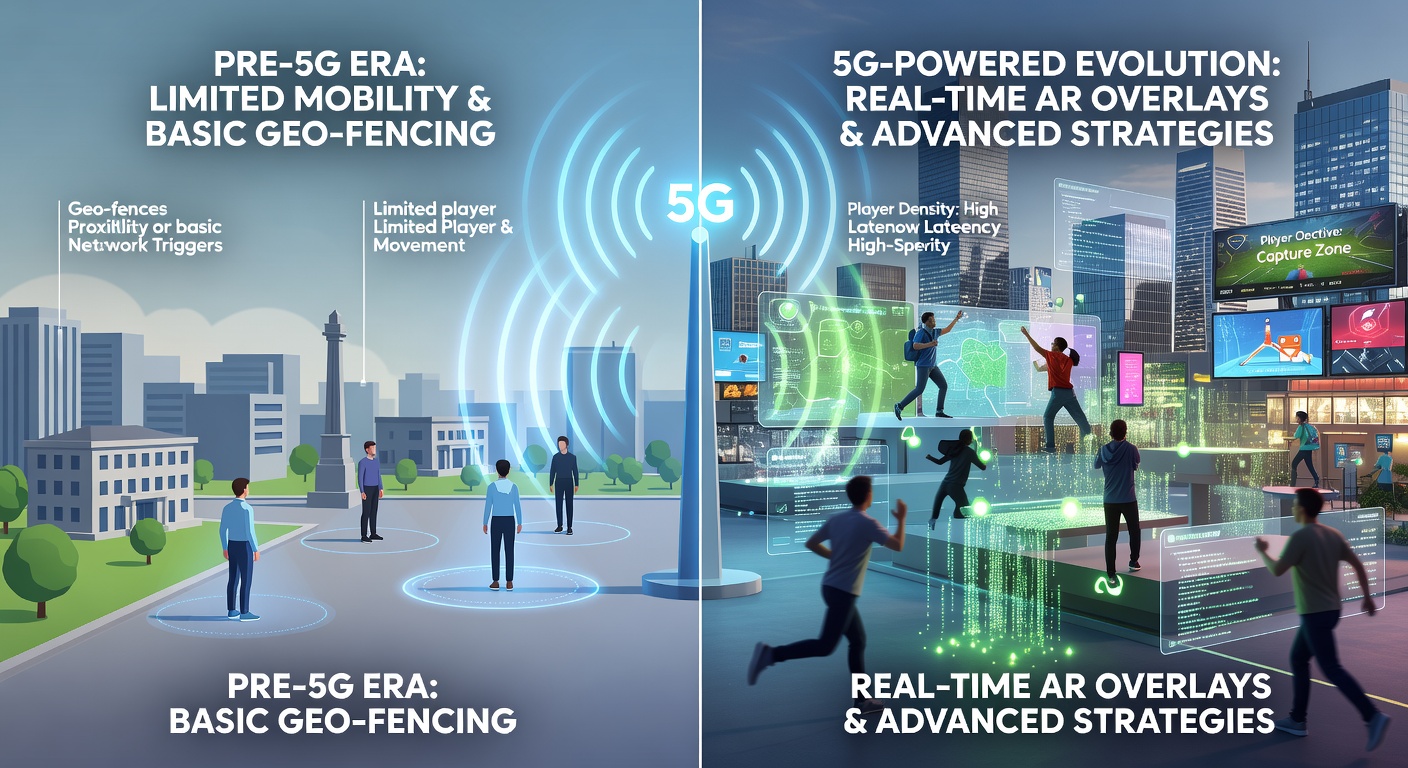
Case examples include titles that trigger narrative branches when clusters of players gather near transit hubs, an approach made feasible once upload speeds supported live synchronization of group progress. As of May 2026, several major urban deployments had incorporated edge computing nodes that further shorten response times for these interactions, allowing strategies centered on timed territorial control within districts that previously suffered from inconsistent connectivity.
Urban Environment Specific Adaptations
Dense building layouts create unique challenges for satellite-based positioning, yet 5G small cells installed at street level compensate by providing supplementary reference points that refine location fixes. Studies compiled by research institutions indicate that games leveraging these hybrid signals achieve positioning within one meter in many tested downtown corridors, compared with five-meter variances recorded under 4G conditions. This precision supports mechanics such as virtual object placement on specific benches or storefronts, turning everyday city features into interactive nodes.
Strategies have also shifted toward seasonal or event-driven campaigns that align with municipal calendars, because reliable connectivity permits rapid content updates distributed across player bases without requiring manual downloads. Regulatory filings from European communications authorities document increased collaboration between network operators and entertainment companies to ensure that gaming traffic does not overload shared infrastructure during peak hours.
Future Trajectories Supported by Current Data
Projections based on coverage expansion patterns suggest continued refinement of location services through 2027, with emphasis on indoor-outdoor transitions common in shopping districts and transit stations. Industry reports highlight that developers are incorporating machine learning models trained on anonymized movement datasets to predict optimal placement of challenges, reducing instances where players encounter empty zones due to outdated mapping. These models rely on the steady data throughput 5G supplies, closing a loop between network performance and game responsiveness.
Conclusion
The technical attributes of 5G have intersected with location-based gaming requirements in ways that encourage more granular urban strategies, from refined positioning to responsive event scaling. Continued infrastructure growth supplies the foundation for these developments, while design teams apply the resulting capabilities to experiences that integrate more closely with city rhythms and spatial layouts.