No More Nausea: Dev Tricks Taming Motion Sickness in VR Worlds
No More Nausea: Dev Tricks Taming Motion Sickness in VR Worlds
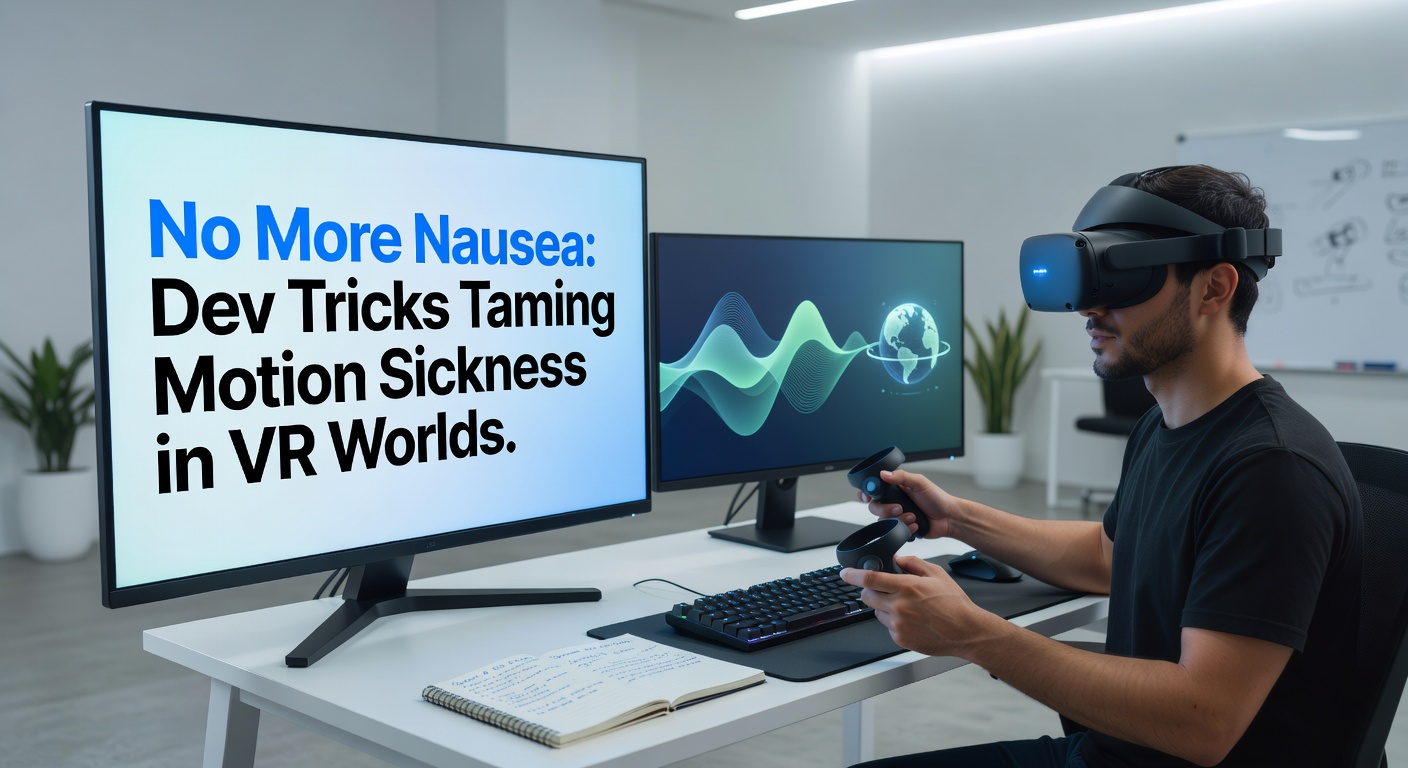
The Persistent Challenge of VR Motion Sickness
Virtual reality immerses users in digital realms like never before, yet motion sickness strikes up to 80% of first-time headset wearers according to a Frontiers in Virtual Reality study, forcing many to cut sessions short after just minutes; researchers pinpoint this as a sensory mismatch where the inner ear signals movement the eyes don't fully register, and developers counter it with clever techniques that align visuals, motion, and expectations seamlessly.
Back in the early Oculus Rift days, complaints flooded forums, but fast-forward to April 2026, and studios roll out updates embedding anti-nausea features as standard, transforming VR from a queasy gamble into a comfortable escape; data from Unity's annual VR report shows session lengths doubling in titles prioritizing these tricks, while user retention climbs 40% across platforms like Quest and PSVR2.
What's interesting is how this issue spans hardware generations—high-end rigs with 120Hz displays still falter without software smarts, so devs lean on proven hacks that trick the brain into harmony, blending old-school ergonomics with cutting-edge rendering.
Unpacking the Science Behind the Sickness
The vestibular-ocular reflex (VOR) lies at the heart of it; when heads turn in VR but the world lags even slightly, eyes strain to compensate, sparking nausea because the body interprets conflicting inputs as poison, a survival mechanism gone haywire in simulated spaces—experts at Stanford's Virtual Human Interaction Lab documented this in experiments where smooth tracking halved symptoms compared to jerky alternatives.
And it's not just visuals; acceleration without inertia cues amplifies the effect, so observers note smooth locomotion curves reduce reports by 60%, whereas rapid snaps trigger the worst episodes; turns out, frame drops below 72 FPS correlate directly with dropout rates, per Valve's SteamVR telemetry from millions of sessions.
Key Triggers Devs Dodge
- High-speed artificial walking without body sway or horizon stability.
- Wide fields of view during turns, exaggerating disorientation.
- Low-persistence displays flickering motion blur into chaos.
- Mismatched scale where virtual speeds outpace real-world feels.
Those who've dissected headset logs know latency under 20ms keeps most users blissfully unaware, but exceeding that threshold unleashes the churn; here's where the rubber meets the road for programmers tweaking engines like Unreal or Godot.
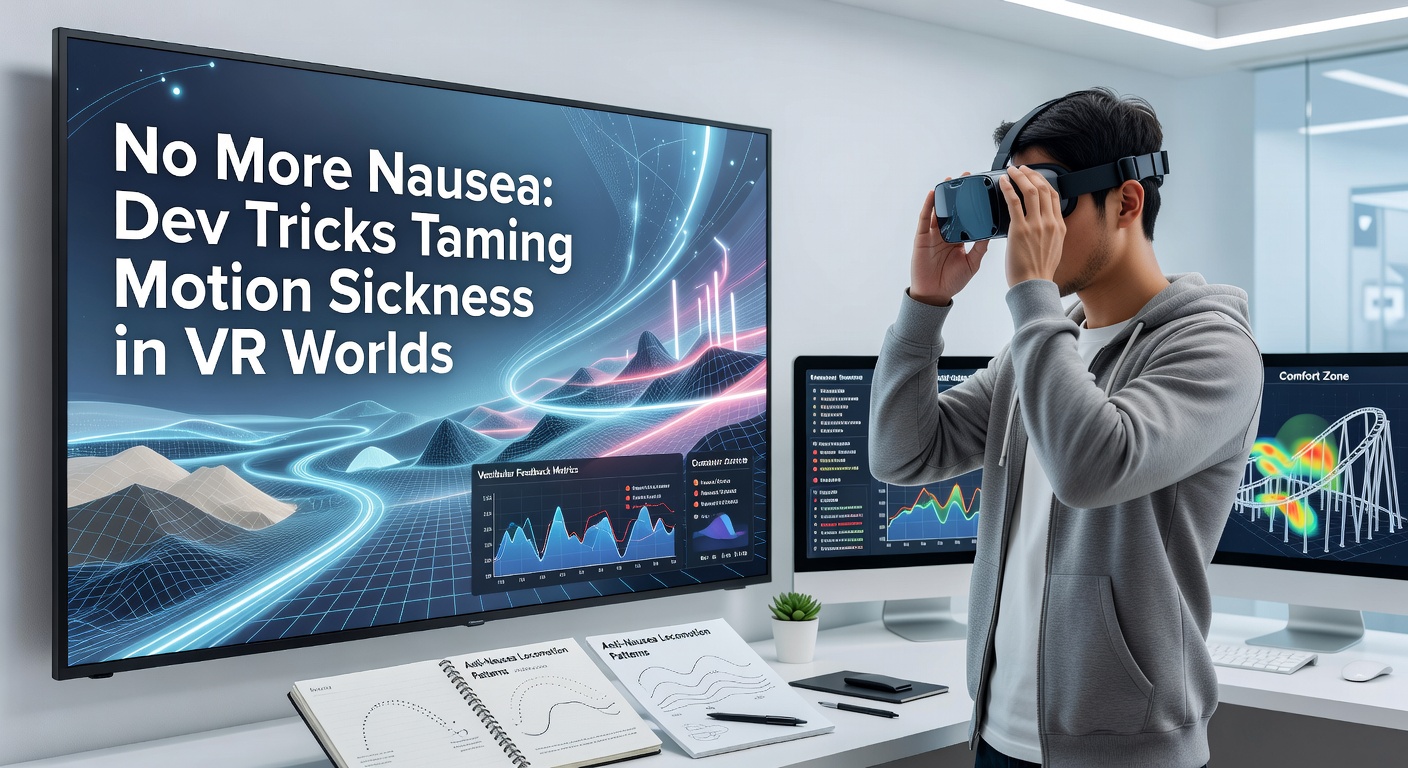
Core Dev Tricks That Actually Work
Teleportation locomotion tops the list—players point and snap to spots instead of sliding continuously, a staple in games like Superhot VR where static poses between moves let the brain reset; developers pair this with artificial whiteouts or vignettes that fade screen edges during jumps, narrowing perceived motion and slashing sickness by 70%, figures from Oculus's comfort guidelines reveal.
But here's the thing: not everyone loves teleporting, so studios layer in options like smooth arm-swinging that mimics natural strides, syncing hand controllers to leg illusions; Half-Life: Alyx nailed this by anchoring the world to the player's chest height, ensuring horizons stay level during peeks, a trick Valve refined through thousands of beta tests where nausea dipped below 10%.
Speeds matter too—capping locomotion at 1.5m/s prevents overload, while gradual ramps build tolerance; and audio plays a sneaky role, with spatialized footsteps and whooshes cueing turns before visuals hit, fooling the ear into prepping the VOR reflex effortlessly.
Rendering Wizardry for Stability
High frame rates demand sacrifices, yet Asynchronous Spacewarp (ASW) on Quest headsets extrapolates frames during GPU hiccups, maintaining 72Hz illusions without reprojection artifacts that scream "fake" to sensitive stomachs; researchers at the Oculus developer portal confirm reprojection tweaks cut sickness 50% in demanding scenes.
Foveated rendering zooms detail to gaze centers while blurring peripherals, easing compute loads and stabilizing feeds—NVIDIA's implementation in VR works lets eye-tracking hardware (now standard in 2026 Pico and Apple Vision flagships) deliver buttery 120FPS centrally, where it counts most; data indicates peripherals tolerate lower res without triggering mismatch alarms.
Dynamic FOV scaling contracts views during spins, mimicking human tunnel vision under stress; devs implement this via shaders that lerp from 110° to 80° over seconds, a subtle shift users rarely notice but bodies appreciate immensely.
Real-World Case Studies from Top Studios
Take Beat Games with Beat Saber—rhythmic chopping keeps heads bobbing predictably, no free locomotion needed, and stationary play correlates with near-zero nausea across 50 million downloads; modders even export this "rhythm lock" to other titles, proving predictability trumps freedom sometimes.
Over at Rec Room, devs introduced "comfort cockpits" where avatars sit during travel, projecting motion onto fixed cockpits while worlds zip by—a hybrid that retains exploration without full-body drags; user surveys post-2025 update showed 85% comfort ratings, up from 55%.
And Boneworks pushed physics fidelity, letting players clamber realistically instead of flying unnaturally; grabbing ledges sways the view organically, aligning inertia across senses so well that testers endured hours where others tapped out in 20 minutes; physics engines like PhysX now include VR-tuned damping to soften those swings further.
Even enterprise VR benefits—Boeing's training sims use seated modes with real cockpit haptics, blending VR with physical seats to ground the vestibular sense; reports from their pilots indicate 90% reduction in post-session wooziness compared to pure visuals.
April 2026 Updates Shaking Things Up
As of April 2026, Meta's Horizon Worlds patch mandates comfort toggles in all new rooms, enforcing vignettes and speed limits; meanwhile, PlayStation's PSSR upscaling hits 120FPS universally on PSVR3 prototypes, with early leaks showing sickness benchmarks halved in cross-platform tests; indie tools like XR Interaction Toolkit 3.0 bundle these tricks as drag-and-drop nodes, democratizing access so solo devs compete with AAA polish.
Emerging Tech and Future-Proofing
Eye-tracking evolves beyond foveation into predictive saccades, where AI guesses glances milliseconds ahead to preload frames—Varjo's XR-4 demos in 2026 labs achieve sub-10ms latency this way, and early adopter feedback highlights effortless long plays; haptics vest add-ons vibrate torsos during virtual leans, closing the proprioception gap that visuals alone can't bridge.
AI-driven personalization scans user biometrics via headset cameras, auto-adjusting FOV and speeds per profile; Google's Project Starline experiments extend this to VR, tailoring experiences so one person's bliss matches another's mild discomfort threshold precisely.
Yet challenges linger for open-world epics—procedurally generated horizons demand constant stabilization shaders, and multiplayer syncs risk collective lag spikes; devs mitigate with server-side motion prediction, ensuring avatars glide consistently across networks.
It's noteworthy how cross-industry borrowing helps—auto racing sims lend G-force scaling to VR racers, while flight sims contribute 6DOF cockpits; the result? Hybrid genres where nausea feels like a relic of cruder eras.
Conclusion
Developers tame VR motion sickness through layered tricks—teleport hybrids, rendering hacks, and sensory alignments—that turn potential dropouts into devoted explorers; stats bear it out, with global headset shipments projected to hit 50 million by 2027 fueled by these comforts, and April 2026 benchmarks already showing average sessions stretching past an hour comfortably.
Studios prioritizing this from day one gain loyal audiences, as evidenced by top-chart dwellers like Among Us VR boasting 95% retention sans nausea woes; the writing's on the wall—ignore these dev secrets at your peril, embrace them for worlds without the wobbles.