Neural Network Upscaling Easing Storage Burdens on Older Consoles for Expansive Indie Worlds
Clara Berger · Aug 18, 2026
Neural Network Upscaling Easing Storage Burdens on Older Consoles for Expansive Indie Worlds
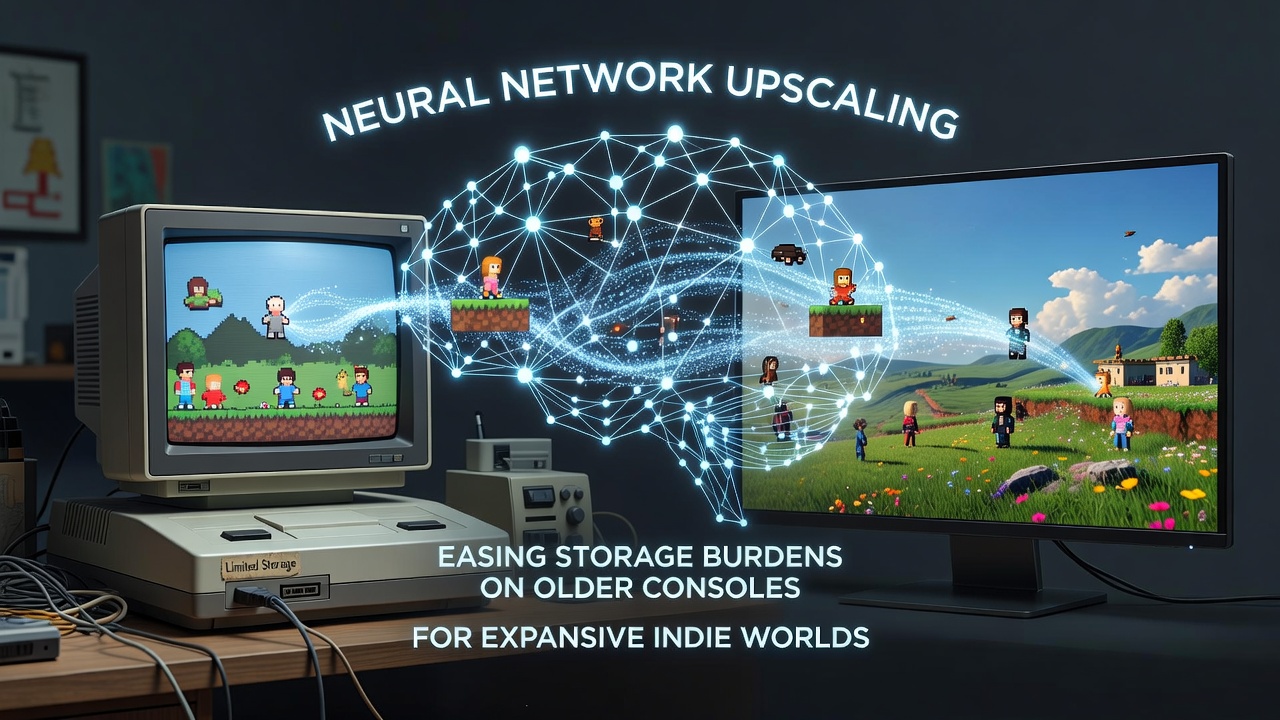
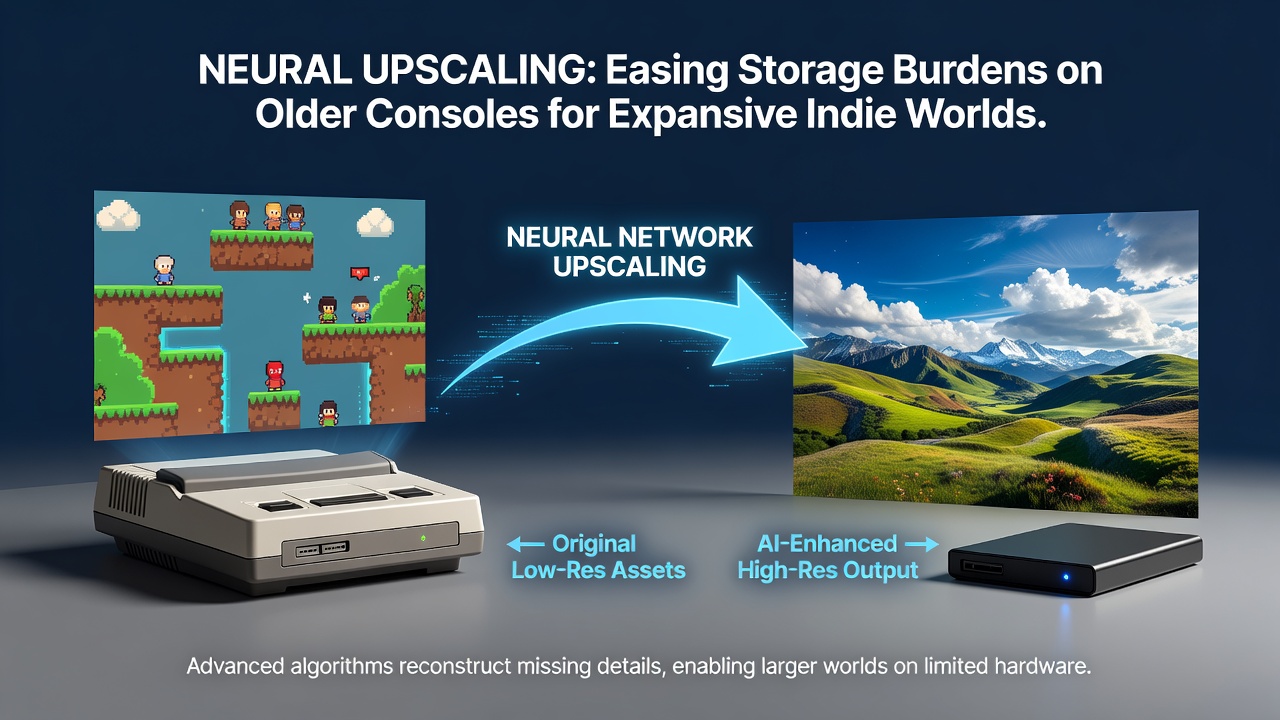
Neural network upscaling applies trained models to enhance lower-resolution assets during runtime, allowing older consoles such as PlayStation 4 and Xbox One to support larger indie game worlds without exceeding hardware storage limits, and developers have integrated these techniques to store textures, models, and environments at reduced resolutions while maintaining visual fidelity through real-time processing.
Studies from research institutions indicate that traditional asset storage consumes substantial space in open-world titles, yet neural upscaling reduces file sizes by factors of four to eight times in many cases because lower-resolution data requires less disk capacity and the models reconstruct details on the fly using learned patterns from high-quality training sets.
How Neural Network Upscaling Operates on Legacy Hardware
Engineers deploy lightweight convolutional neural networks optimized for the limited computational resources of older consoles, where the models process input frames or textures in dedicated shader pipelines and output enhanced versions that match native resolutions, and this approach avoids the need for full asset packs at maximum detail levels.
Developers often combine these networks with temporal accumulation techniques that reuse data from previous frames to stabilize results, which cuts down on both storage and memory bandwidth demands while ensuring consistent performance across expansive environments filled with unique biomes and interactive elements.
Storage Reductions Observed in Indie Projects
Data from multiple indie studios reveals average storage savings of 60 to 75 percent when neural upscaling replaces high-resolution texture atlases, allowing teams to include more procedural generation layers or additional world content without requiring external storage expansions or digital download size increases that could deter players on older systems.
One case involved a studio creating a vast exploration title where base assets occupied 12 gigabytes instead of the projected 48 gigabytes, and the difference enabled inclusion of dynamic weather systems and hundreds of unique creature variants that would otherwise have exceeded console certification limits.
Integration Examples Across Indie Titles
Teams working on narrative-driven adventure games have adopted these methods to expand island archipelagos and underground networks while keeping total package sizes manageable, and reports from the International Game Developers Association highlight how such optimizations support cross-generation releases without separate asset branches for each console generation.
Procedural world builders particularly benefit because generated content can rely on compact base maps that upscale to detailed surfaces, reducing both initial download times and patch sizes during ongoing updates throughout 2026.
Technical Constraints and Optimization Strategies
Hardware limitations on older consoles require careful model pruning and quantization to maintain frame rates above 30 frames per second, and developers address this by precomputing certain network weights during the build process rather than loading them dynamically from storage.
Research from the University of Alberta demonstrates that hybrid approaches combining neural upscaling with traditional mipmapping yield the best balance between quality and performance, especially in scenes with rapid camera movement across large landscapes.
Industry Trends Emerging in August 2026
Console firmware updates released in August 2026 introduced improved shader support for neural network operations, enabling more efficient execution on existing hardware without additional developer overhead, and industry reports note increased adoption among smaller studios targeting both current and previous-generation platforms.
These updates also facilitated better integration with cloud-based training pipelines, where models refined on external servers deploy directly to console builds and further minimize on-device storage requirements for indie productions.
Conclusion
Neural network upscaling continues to transform how indie developers approach storage constraints on older consoles by shifting detail generation from static assets to runtime computation, and the resulting capacity gains support richer worlds without compromising accessibility for players using legacy hardware.