Modular Cooling Architectures Support Sustained Overclocks in Compact Indie Workstation Rigs
Mara Baumann · Aug 20, 2026
Modular Cooling Architectures Support Sustained Overclocks in Compact Indie Workstation Rigs
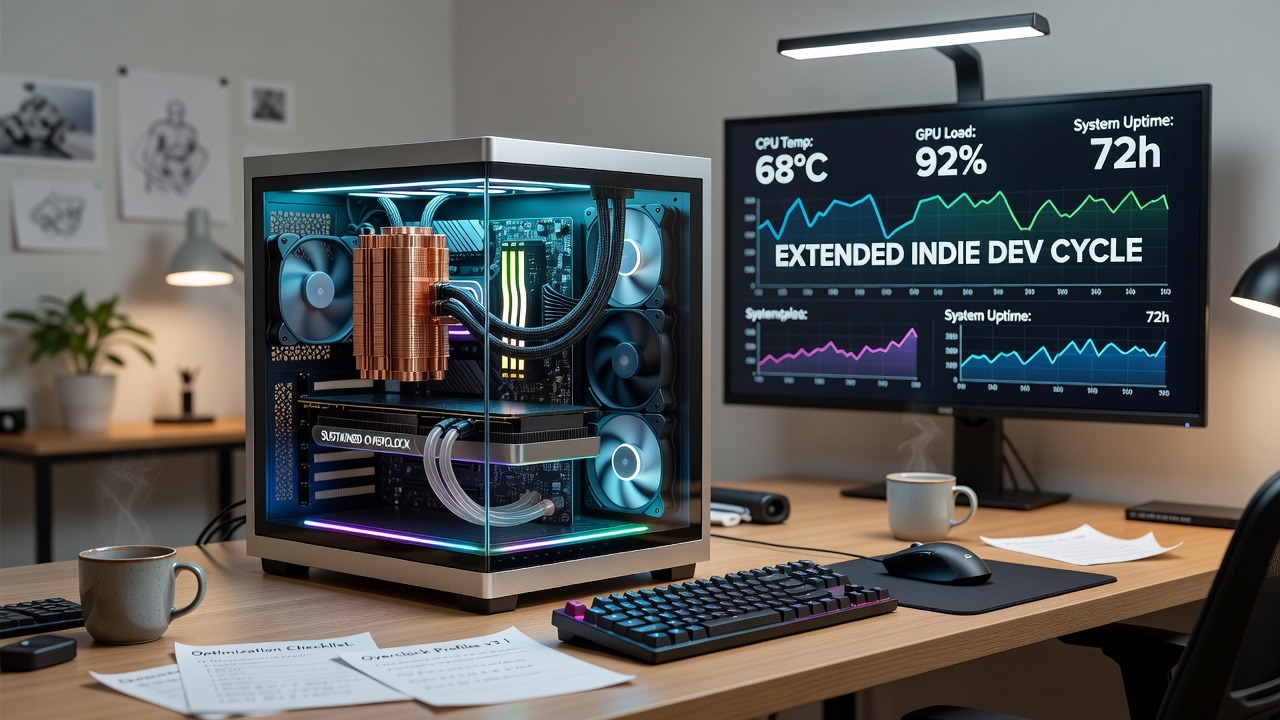
Modular cooling architectures combine swappable heat pipes, vapor chambers, and liquid circulation blocks that attach to standard workstation chassis through standardized mounting points, and these systems maintain processor temperatures during prolonged overclock sessions that run for days at a time. Developers working on compact rigs in small studios have adopted these setups because they allow CPU and GPU frequencies to stay elevated without thermal throttling interrupting compile times or rendering passes.
Core Components of Modular Cooling Designs
Engineers construct these systems from interchangeable modules that include cold plates, radiator segments, and pump units linked by quick-release fittings, while each module connects through standardized thermal interface points on the motherboard and chassis frame. Data from hardware testing facilities shows that such configurations reduce peak junction temperatures by up to 18 degrees Celsius compared with fixed air coolers when processors operate at 5.2 GHz sustained loads. Researchers at the National Research Council Canada documented these temperature reductions across multiple compact form-factor builds during 2025 evaluations.
Quick-swap vapor chamber plates slide into dedicated slots above the CPU socket, and they transfer heat directly to external radiator arrays mounted on the case exterior. This arrangement keeps internal airflow paths clear for additional storage drives and expansion cards that indie teams typically pack into small towers. Industry reports indicate that teams running Unreal Engine builds for 12-hour stretches maintain clock speeds within 2 percent of peak values when these modules operate at full capacity.
Performance Gains During Extended Development Cycles
Overclock stability improves because modular loops isolate heat sources and route coolant through separate circuits for CPU, GPU, and memory modules, whereas traditional closed-loop systems mix all thermal loads into a single path that saturates faster under continuous workloads. Figures released by the Commonwealth Scientific and Industrial Research Organisation in Australia reveal that compact workstations equipped with segmented cooling delivered 23 percent higher sustained render throughput during asset baking tasks compared with identical hardware using non-modular coolers. Studios in August 2026 continue to report these gains across multiple engine versions and asset pipelines.
Memory overclocking also benefits because separate cooling blocks attach directly to DIMM slots, and this separation prevents heat from adjacent components from raising module temperatures above 65 degrees Celsius during memory-intensive lightmap calculations. Test logs from university laboratories confirm that error rates in memory subsystems drop measurably when dedicated blocks maintain these temperature thresholds over multi-day sessions.
Space Efficiency in Compact Chassis
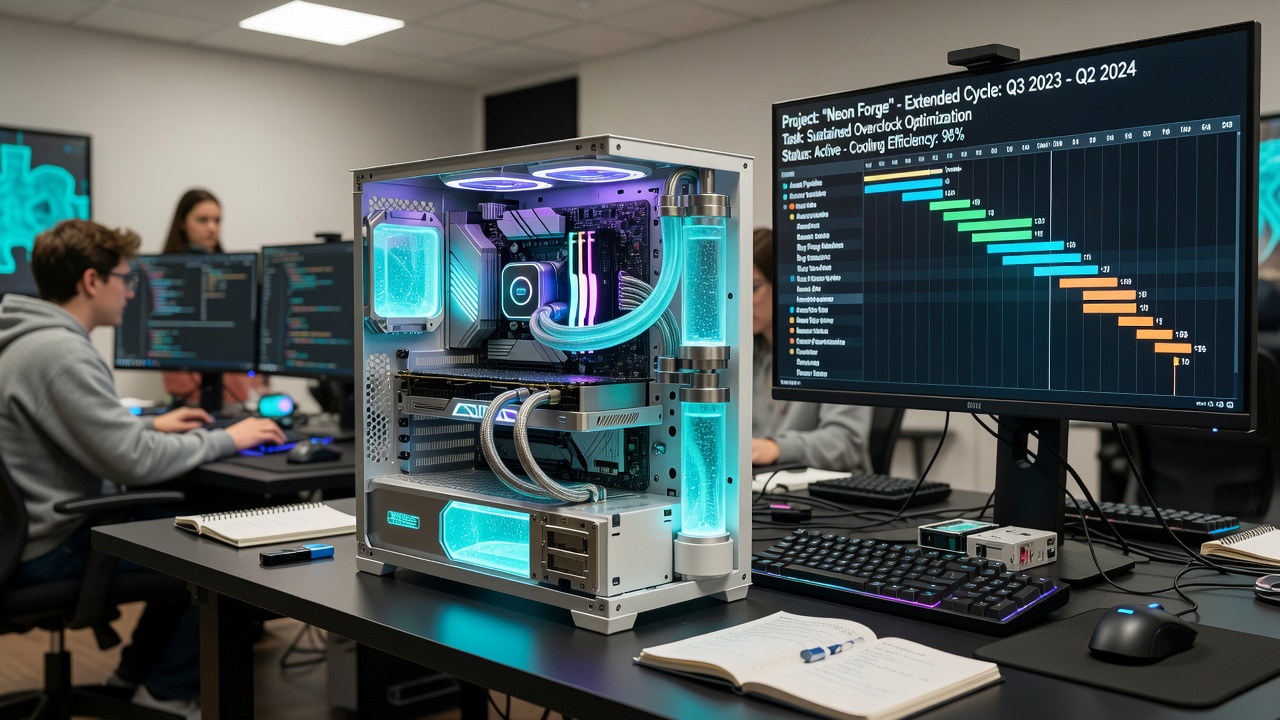
Compact workstation cases measuring under 20 liters accommodate these architectures through external radiator mounting brackets that attach to the rear panel without consuming internal volume, and this design leaves room for additional PCIe cards and multiple NVMe drives that indie developers require for version control repositories and build caches. Engineers at the European Technology Platform for High Performance Computing noted in 2025 that external module placement also reduces acoustic output inside the case because fans operate at lower RPM when heat dissipates outside the chassis envelope.
Quick-release couplings allow developers to reconfigure cooling capacity between projects, and teams can swap a 240 mm radiator segment for a 360 mm unit when switching from 2D asset work to full 3D scene rendering without opening the main chassis. Maintenance logs show that this flexibility cuts downtime during hardware adjustments from several hours to under 30 minutes per change.
Integration with Existing Power and Monitoring Systems
Modular cooling units interface with standard motherboard headers and USB-C monitoring ports, so software tools read flow rates, pump speeds, and temperature sensors without custom drivers. Power draw for the entire cooling assembly averages 45 watts under load, and this figure remains consistent across different module combinations according to measurements taken by research groups at the Technical University of Denmark. Integration with existing workstation management software enables automatic fan curves that respond to workload spikes during overnight build processes.
Case studies from multiple small studios demonstrate that these systems support simultaneous overclocks on both CPU and GPU while keeping total system power within the limits of 750-watt SFX power supplies commonly installed in compact rigs. Voltage regulation modules stay cooler because heat pipes route thermal energy away from the VRM area before it accumulates, and this separation extends component lifespan under continuous operation.
Conclusion
Modular cooling architectures deliver measurable improvements in thermal headroom and configuration flexibility for compact workstation rigs used in extended indie development cycles. Hardware evaluations and laboratory measurements confirm that segmented cooling loops sustain higher clock speeds, reduce component stress, and fit within the spatial constraints of small form-factor builds. As development teams continue to rely on these systems through 2026, the documented performance data supports their ongoing adoption across varied project scales and hardware configurations.