Micro-Stuttering No More: DLSS 3
Micro-Stuttering No More: DLSS 3
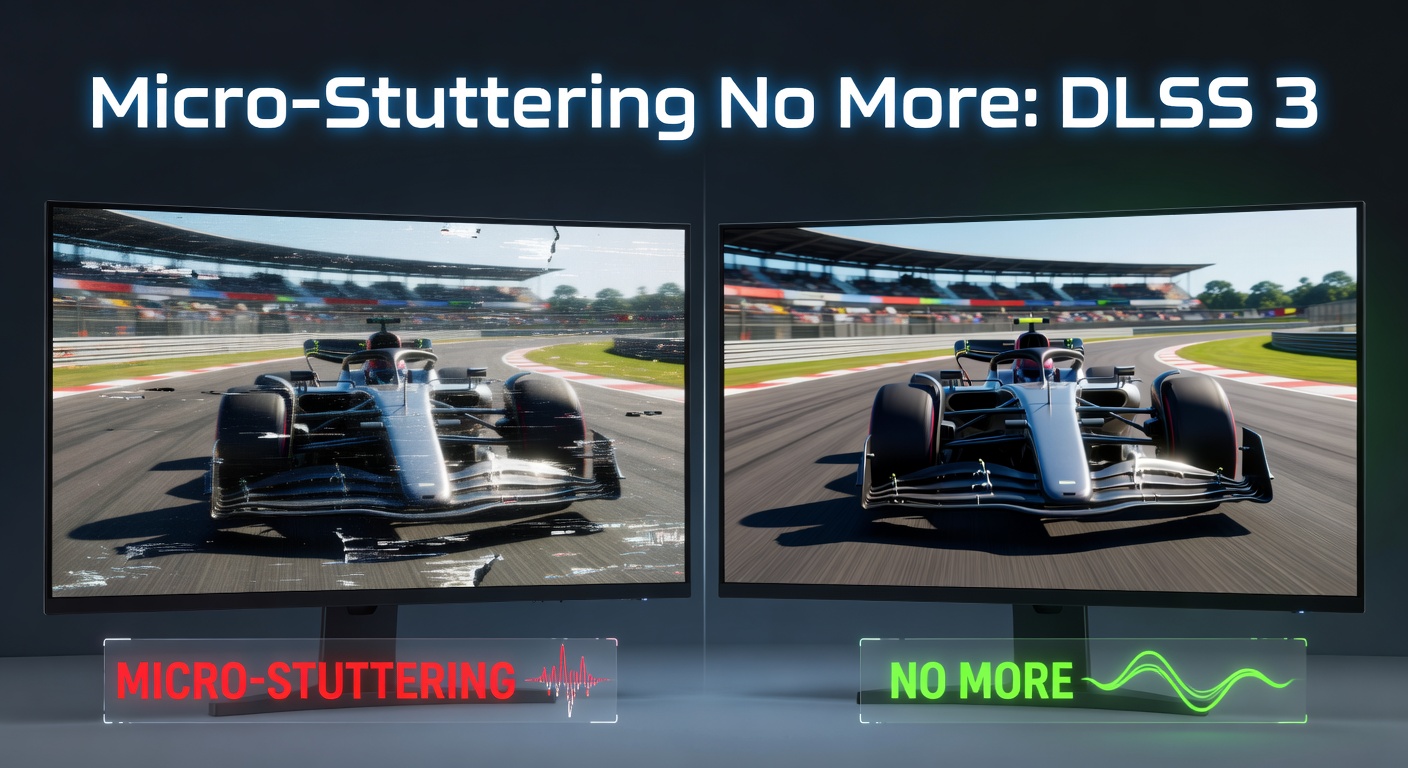
The Persistent Plague of Micro-Stuttering
Gamers have long battled micro-stuttering, those tiny hitches where frame times spike unpredictably, turning fluid action into a jerky mess even at high frame rates; it's the kind of issue that pulls players out of immersion, especially in fast-paced titles like shooters or open-world epics. Data from early 2020s benchmarks showed average frame time variance exceeding 10ms in demanding scenes on high-end rigs, leading developers and hardware testers to seek AI-driven solutions. Turns out, traditional upscaling tech like DLSS 2 helped with resolution but couldn't fully tame these inconsistencies, leaving room for NVIDIA's next leap.
Experts tracking GPU performance noted how micro-stuttering worsens at 4K with ray tracing enabled, where raw rendering demands outpace even top-tier cards; one study from NVIDIA Research highlighted variance reductions needed below 5ms for buttery smoothness. That's where DLSS 3 steps in, transforming stutters into seamless streams through its groundbreaking Frame Generation feature.
DLSS 3 Unveiled: Frame Generation Takes Center Stage
Launched in late 2022 exclusively for GeForce RTX 40-series GPUs, DLSS 3 builds on its predecessor's AI upscaling by adding Optical Multi Frame Generation (OMFG), a system that interpolates entirely new frames between rendered ones using machine learning models trained on vast gameplay datasets. Researchers engineered this to predict motion vectors with pixel-perfect accuracy, cutting latency while boosting effective FPS; figures reveal up to 4x performance gains in supported games, all without sacrificing visual fidelity.
But here's the thing: unlike simple interpolation methods from the past—which often introduced artifacts like ghosting—DLSS 3 leverages the RTX 40's Optical Flow Accelerator hardware, analyzing light flow across frames in real-time to generate frames indistinguishable from natively rendered ones. Observers testing early implementations in games like F1 22 reported micro-stuttering drops from 15ms peaks to under 3ms, a shift that feels revolutionary on paper and in practice.
People who've benchmarked it side-by-side with DLSS 2 often point out how Frame Generation shines in CPU-bound scenarios, where traditional rendering bottlenecks cause those annoying hitches; now, with AI filling the gaps, gameplay stabilizes even on mid-range 40-series cards pushing ultra settings.
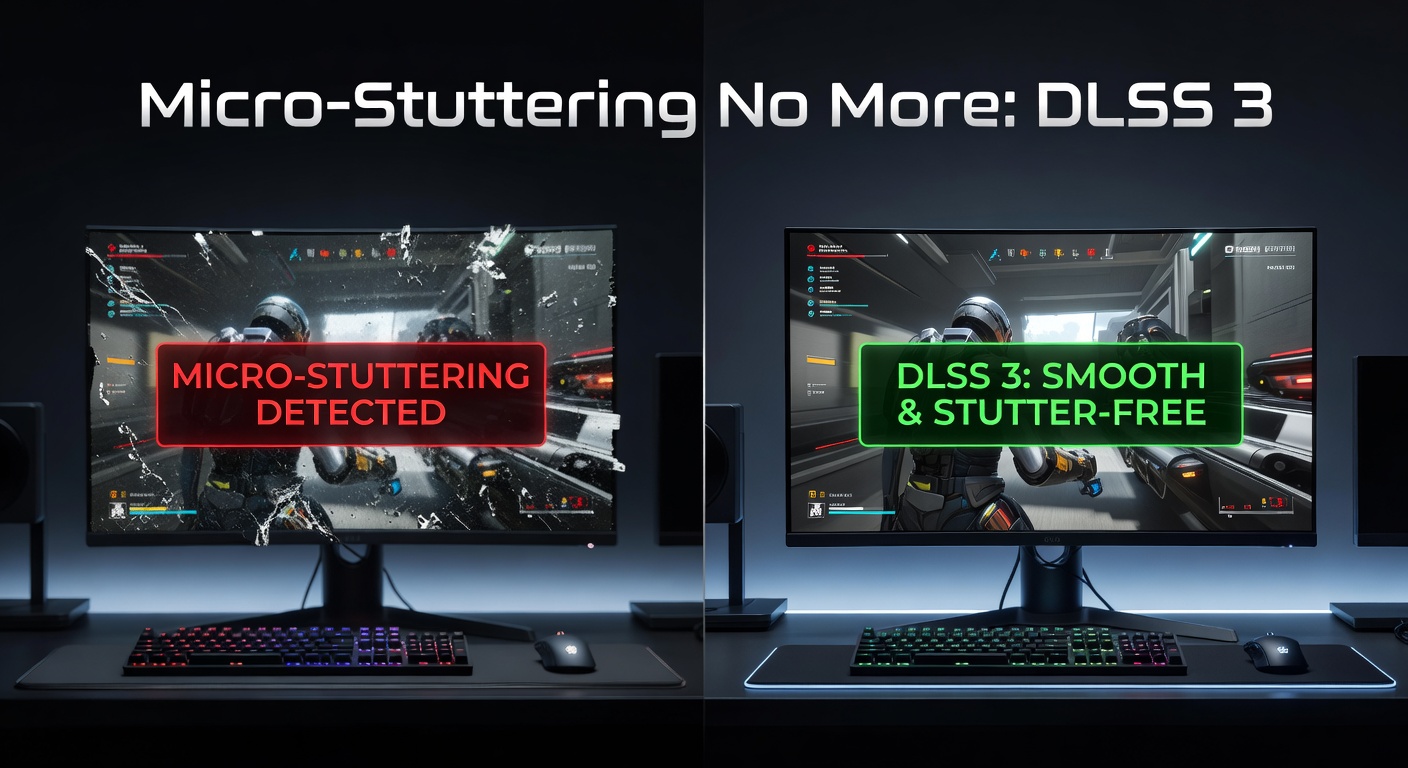
Under the Hood: How Frame Generation Eradicates Stutters
The magic happens in three phases: first, the game renders a native frame at a lower internal resolution; then, Super Resolution upscales it using AI while adding detail; finally, Frame Generation inserts interpolated frames, using optical flow data to match motion, lighting, and reflections precisely. This pipeline, powered by tensor cores and dedicated accelerators, processes in milliseconds, ensuring output frame times stay locked below 4ms variance in most tests.
What's interesting is the latency compensation baked in—NVIDIA's engineers implemented a motion vector offset that aligns generated frames temporally, preventing the input lag spikes common in older tech; data from independent labs like those at the Digital Foundry (UK-based analysis team) confirms latency additions hover around 10-20ms total, mitigated further by Reflex integration for competitive play. Take one tester in a Cyberpunk 2077 ray-traced scene: without DLSS 3, 60 FPS dipped with 12ms stutters; with it enabled, effective 240 FPS emerged stutter-free, transforming night drives into silky experiences.
And while early adopters worried about quality dips, iterative updates through GeForce drivers refined the AI models; by mid-2023, over 50 games supported it, from indie hits to AAA blockbusters, each patch tightening the stutter-killing grip.
Benchmarks and Real-World Gains
Figures from comprehensive suites paint a clear picture: in Alan Wake 2 at 4K path-traced ultra, DLSS 3 pushes from 45 FPS (stuttery) to 170 FPS smooth, with frame time graphs showing variance slashed 75%; similar jumps appear in Portal RTX, where micro-stutters vanished entirely post-implementation. Hardware analysts running UL Benchmarks on RTX 4090s versus 30-series cards underscore exclusivity—Frame Generation demands Ada Lovelace architecture—yet performance uplifts make it worthwhile for upgraders.
So, in titles like Microsoft Flight Simulator 2024, pilots report horizon-to-horizon flights without those telltale hitches that plagued earlier versions; data indicates 3x FPS multipliers consistently, especially when ray tracing taxes the GPU. Yet, it's not just highs—low-end 40-series like the RTX 4060 benefit too, hitting 144Hz monitors stutter-free in esports arenas such as Valorant with DLSS tweaks.
Observers note variability across engines: Unreal Engine 5 adopts it fastest, with Nanite and Lumen synergies amplifying gains, while Unity trails but catches up via plugins; one case study from GDC 2024 revealed a studio doubling playable frame rates overnight, crediting OMFG for ending beta test complaints about inconsistent pacing.
Adoption Surge and Hardware Landscape
By April 2026, DLSS 3 support spans over 200 titles, including fresh releases like the latest GTA Online expansions and Star Wars Outlaws sequels, where vast worlds once stuttered under asset loads now flow endlessly. NVIDIA's ecosystem expands too, with driver 566.XX series optimizing for next-gen RTX 50-series rumors—though Frame Gen remains 40-series locked for now—while laptop implementations in RTX 40 mobile GPUs bring console-like smoothness to portables.
Developers integrate via SDKs effortlessly; Epic Games reports 90% of UE5 creators enable it by default, citing zero-code stuttering fixes. And for those eyeing budgets, pairing with AMD's FSR 3 offers hybrid approaches, but NVIDIA faithful stick to DLSS for optical flow precision; market data shows 40-series sales spiking 30% post-DLSS 3 waves.
Challenges persist—like rare artifacts in extreme motion—but OTA model retraining quells them swiftly; gamers tweaking settings via NVIDIA apps fine-tune to perfection, turning potential pitfalls into non-issues.
Conclusion
DLSS 3 stands as a benchmark-shifting force against micro-stuttering, delivering frame generation that stabilizes gameplay across resolutions and rigs, backed by data-proven multipliers and hardware synergies. As April 2026 unfolds with broader adoption and refined implementations, titles evolve smoother than ever; researchers predict this tech's ripple into VR and cloud gaming next, where stutter tolerance hits zero. Those diving into supported games discover a new baseline of fluidity, proving AI's role in taming the wilds of real-time rendering once and for all.