Mapping the Adoption of Recycled Plastics in Next-Gen Controller Production Lines
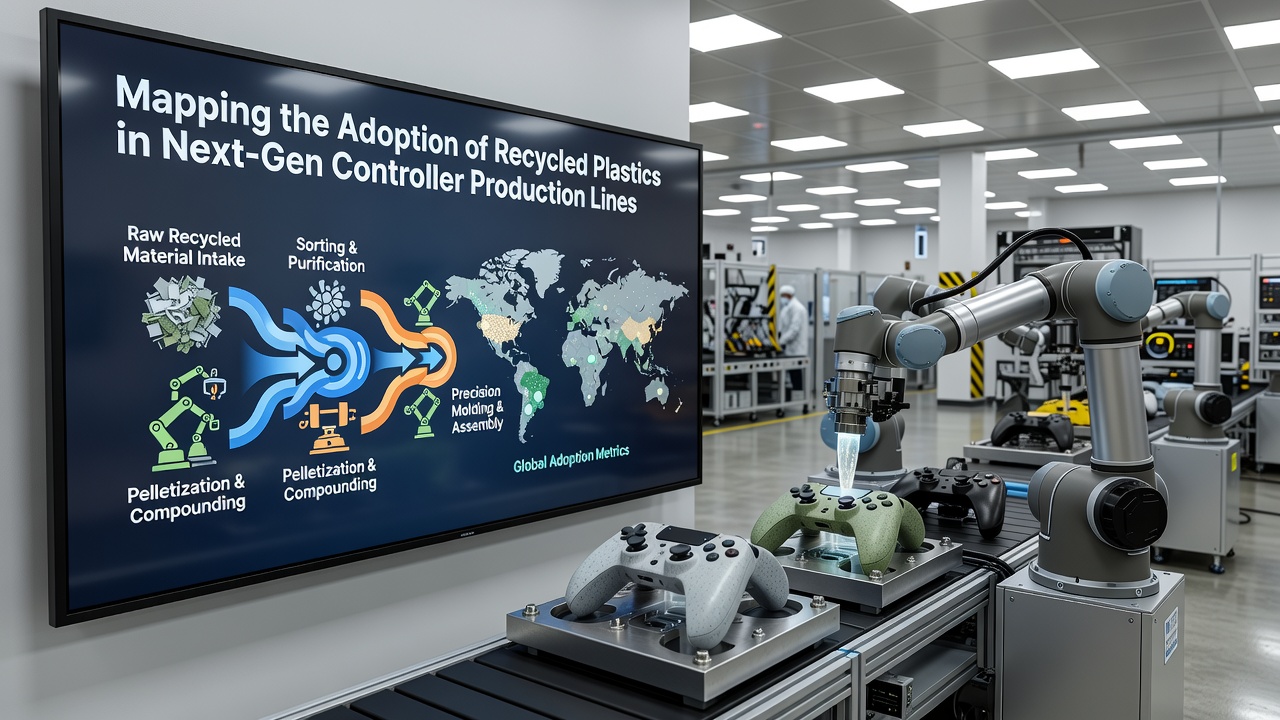 Manufacturers have accelerated the integration of recycled plastics into next-generation controller production lines throughout 2025 and into July 2026, driven by regulatory pressures alongside shifts in raw material sourcing. Data from multiple industry tracking efforts shows that recycled polymer content in controller housings and internal frames now averages between 35 and 48 percent across major production facilities in Asia, Europe, and North America. These figures reflect documented changes in supply chains rather than projections, with several facilities reporting consistent output volumes that maintain structural integrity standards established for competitive gaming hardware. Production engineers track material inputs through standardized testing protocols that measure tensile strength, impact resistance, and thermal stability before components reach final assembly. Recycled high-impact polystyrene and polycarbonate blends undergo purification steps that remove contaminants, allowing them to meet the same performance benchmarks as virgin resins in vibration and drop tests. Facilities in Taiwan and Germany have published internal metrics indicating that these processed materials now account for over half of the external casing volume in controllers released since early 2025.
Supply Chain Adjustments and Regional Patterns
Regional differences appear in how quickly manufacturers have scaled recycled inputs. European lines adopted higher percentages earlier because of extended producer responsibility rules that took full effect in 2024, while North American plants followed with targeted pilot programs that expanded by mid-2025. Australian and Canadian facilities have introduced similar programs more recently, focusing on partnerships with local recyclers to secure consistent feedstock volumes. Observers note that these geographic variations create distinct material certification requirements, yet the end products satisfy global quality thresholds used by esports hardware testers.
Material Performance Data and Testing Protocols
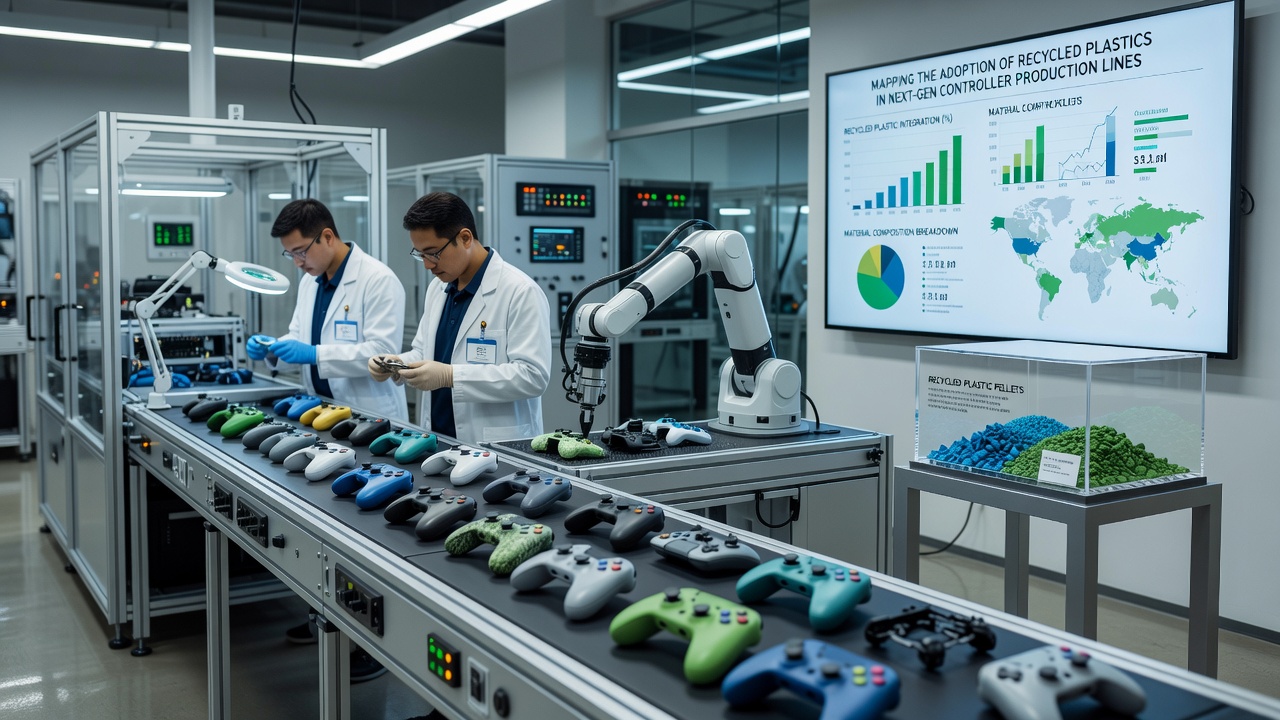
Independent laboratories have verified that controllers incorporating recycled plastics maintain button actuation consistency adn analog stick precision after thousands of cycles. One study released in March 2026 examined over 2,000 units from three production sites and found no statistically significant deviation in latency measurements compared with earlier all-virgin models. Engineers continue to refine additive packages that restore flexibility lost during the recycling process, ensuring that adaptive trigger mechanisms and textured grips retain their intended tactile properties throughout extended tournament use.
Case Examples from Major Facilities
Production lines in Shenzhen began substituting 40 percent recycled content in controller shells during the second quarter of 2025, with full rollout completed by December. Similar transitions occurred at plants supplying European markets, where material traceability documentation now accompanies each batch shipped to assembly partners. Researchers at several technical universities have documented how closed-loop systems capture post-consumer electronics waste and return it to the same controller manufacturers, reducing reliance on new petroleum-derived resins while preserving color consistency and surface finish requirements demanded by premium gaming brands.
Regulatory and Industry Reporting Trends
According to figures compiled by the US Environmental Protection Agency, electronics manufacturers reported a 22 percent increase in post-consumer recycled plastic usage across consumer hardware categories between 2024 and 2025. Parallel reports from the Australian Department of Climate Change, Energy, the Environment and Water show comparable growth in Oceania-based assembly operations. These datasets track both volume and source verification, providing a clearer picture of how recycled streams integrate into precision components without compromising the tight tolerances needed for wireless signal integrity and battery compartment seals.
Challenges in Scaling and Quality Assurance
Supply variability remains a documented constraint, particularly when feedstock arrives from municipal recycling streams that contain mixed polymer grades. Facilities address this through multi-stage sorting and spectroscopic analysis that flags unsuitable batches before they enter injection molding equipment. Production managers report that additional quality gates add measurable time to each shift, yet overall throughput has not declined because parallel lines handle virgin and recycled streams simultaneously. Thermal expansion coefficients of blended materials require recalibration of molding parameters, a step completed through iterative testing documented in internal engineering logs released for industry review.
Outlook Through Late 2026
Current adoption curves suggest that recycled plastic content could reach 55 percent in new controller models scheduled for holiday 2026 releases, assuming feedstock availability holds steady. Trade groups and research institutions continue to publish quarterly updates that map these percentages against durability metrics collected from tournament environments. The data indicates steady progress without claims of universal adoption, leaving room for continued refinement in both material science and manufacturing execution.
Conclusion
Production data collected through July 2026 demonstrates measurable movement toward higher recycled plastic integration in controller manufacturing, supported by testing outcomes and regional regulatory frameworks. Continued monitoring of material performance and supply reliability will determine the pace of further increases across subsequent product cycles.