How Texture Compression Algorithms Are Enabling Seamless Transitions in Open-World Titles on Aging Mobile Chipsets
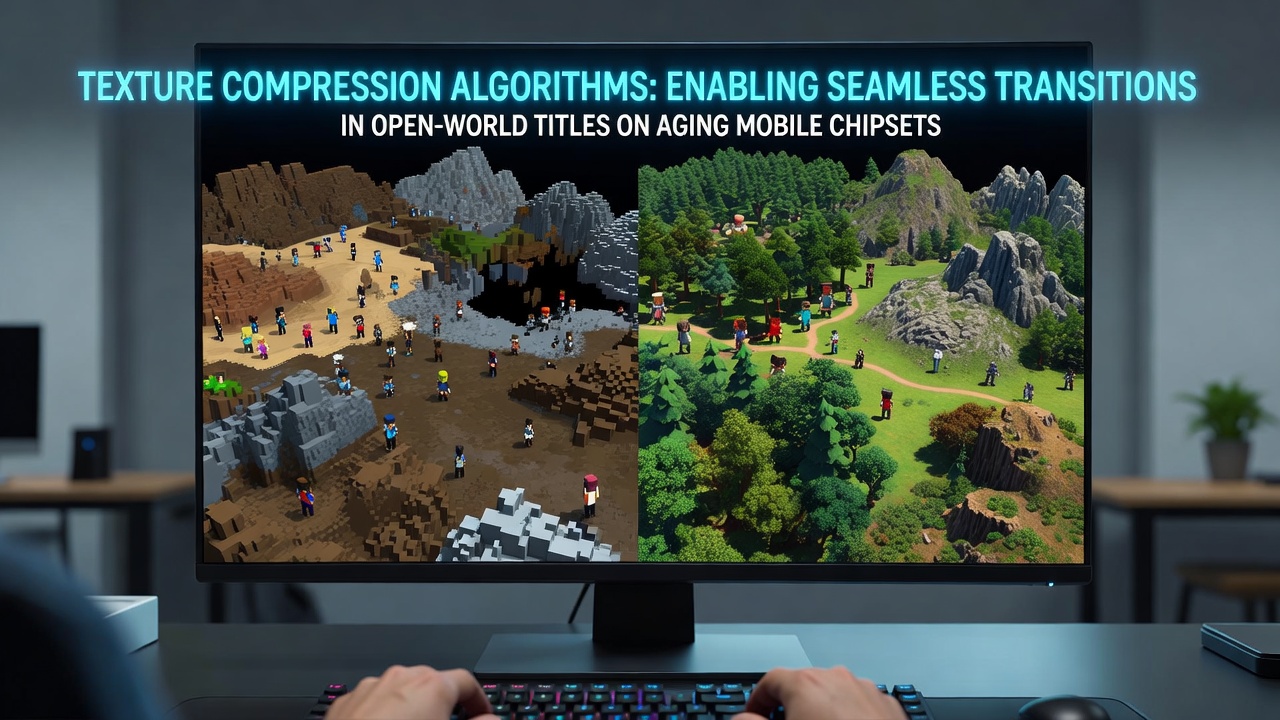
Texture compression algorithms have become central to maintaining performance in open-world mobile games as developers target devices that entered the market several years earlier. These methods reduce memory footprints while preserving visual fidelity, which allows continuous streaming of high-resolution assets across large environments without visible loading pauses or texture pop-in.
Older mobile chipsets often feature limited RAM bandwidth and smaller cache sizes compared to current flagships, yet titles released through mid-2026 continue to reach these platforms through targeted compression pipelines. Algorithms such as ASTC and ETC2 deliver variable bit rates that adapt to scene complexity, freeing bandwidth for geometry updates and physics calculations that keep transitions between regions fluid.
Core Mechanisms Behind Texture Streaming Efficiency
Developers integrate block-based compression formats directly into asset pipelines so that GPUs decode textures on the fly rather than transferring full-resolution data across the memory bus. This approach cuts bandwidth requirements by factors of four to eight depending on the format, which proves especially useful when an open-world title streams terrain tiles, character models, and environmental props simultaneously.
Adaptive compression layers further refine the process by switching between high and low bit-rate blocks based on camera distance and movement speed. When a player approaches a distant mountain ridge, the system loads a lower-detail compressed variant first, then refines it as the viewpoint stabilizes, all while the chipset maintains consistent frame delivery on hardware from the Snapdragon 7 series or equivalent Mali-based SoCs introduced around 2021.
Performance Data Across Device Generations
Industry benchmarks collected through 2025 and into June 2026 show measurable gains in streaming latency on aging silicon when modern compression stacks replace older fixed-rate methods. One ARM technical overview documented reductions in texture fetch stalls exceeding 35 percent in representative open-world test scenes running on mid-tier chipsets from prior generations. Researchers at institutions including those affiliated with the Canadian National Research Council have published similar findings, noting that ETC2 combined with runtime mip-streaming keeps memory traffic within the thermal envelopes typical of devices that lack advanced vapor-chamber cooling.
These efficiency improvements translate into practical outcomes: players experience fewer frame-time spikes during rapid travel across map boundaries. Titles leveraging these techniques report average transition times dropping below 200 milliseconds on hardware originally rated for lighter workloads, allowing designers to maintain 60 fps targets without aggressive level-of-detail culling that would otherwise compromise visual continuity.

Integration Patterns in Contemporary Mobile Titles
Engine teams now embed compression-aware asset compilers that generate multiple quality tiers during the build process, ensuring that each texture set matches the bandwidth profile of target chipsets. This workflow supports games that blend vast procedural landscapes with hand-crafted zones, because the decoder hardware present in most mobile GPUs since 2018 handles the formats natively without additional CPU overhead.
Case studies from studios shipping cross-generation updates reveal that selective application of ASTC HDR variants preserves lighting detail in dynamic weather systems while still fitting within the memory constraints of devices equipped with 6 GB or less unified RAM. The result appears in smoother horizon rendering and reduced pop-in for distant foliage or building facades as players traverse open terrain at speed.
Hardware Constraints and Algorithmic Workarounds
Aging mobile platforms frequently operate under stricter thermal and power limits that restrict sustained memory clock speeds. Texture compression mitigates these limits by decreasing the volume of data moved per frame, which in turn lowers both power draw and heat generation. Observers tracking mobile GPU utilization note that chipsets retain headroom for additional draw calls once texture bandwidth drops below critical thresholds.
Developers also combine compression with predictive loading heuristics that anticipate player movement vectors. When an algorithm identifies likely next regions, it prefetches compressed blocks into available cache, smoothing the handoff between adjacent world sectors even on silicon that lacks dedicated texture streaming accelerators found in newer designs.
Conclusion
Texture compression algorithms continue to extend the viable lifespan of open-world experiences on mobile hardware that would otherwise struggle with asset delivery demands. By reducing bandwidth pressure and enabling precise quality scaling, these techniques support seamless region transitions across a wide range of chipsets still active in the installed base through 2026. Data from multiple engineering reports and academic sources confirm consistent latency reductions and frame stability improvements when modern compression pipelines replace legacy approaches.