How Open-Source Toolkits Are Streamlining Asset Pipelines for Indie Developers Targeting Mixed-Reality Headsets and Portable Consoles
Eden Griffin · Jul 26, 2026
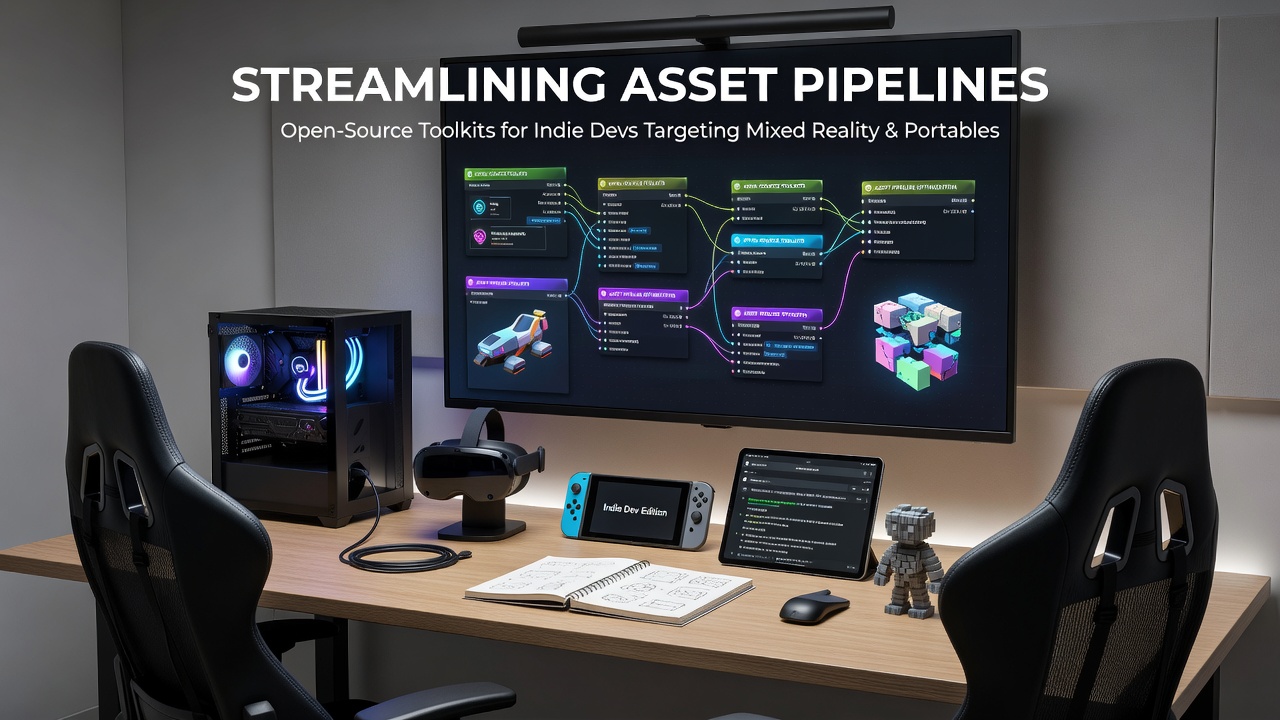
How Open-Source Toolkits Are Streamlining Asset Pipelines for Indie Developers Targeting Mixed-Reality Headsets and Portable Consoles
Indie developers building content for mixed-reality headsets and portable consoles have adopted open-source toolkits to handle asset creation, conversion, and optimization at scale. These solutions integrate with existing engines and reduce manual steps across modeling, texturing, rigging, and format conversion pipelines.
Blender serves as a central hub in many studios because its Python API allows scripted batch processing of meshes, UVs, and materials before export to glTF or USD formats. Godot engine teams combine this with custom importers that strip unused data and compress textures using open-source libraries such as basis_universal. The result appears in shorter iteration cycles when targeting devices that run on limited RAM and GPU budgets.
Core Components of Modern Open-Source Pipelines
Asset pipelines now rely on standardized interchange formats maintained by cross-industry groups. glTF 2.0 and its extensions handle physically based materials and animation data while remaining lightweight enough for wireless streaming to headsets. OpenXR provides a common runtime layer that lets developers test the same asset set across multiple mixed-reality devices without rewriting loader code. Researchers at institutions in Europe have documented how these formats cut file sizes by measurable percentages when paired with automated LOD generation scripts.
Texture and mesh compression tools such as meshoptimizer and Draco integrate directly into CI systems. A typical workflow pulls source files from version control, runs a Python or Rust script that generates multiple LODs and compressed variants, then pushes the outputs to a content delivery network. Portable console developers add an extra pass that targets ASTC or ETC2 formats required by ARM-based GPUs, all driven by the same open-source binaries.
Adaptations for Mixed-Reality Headsets
Mixed-reality titles demand assets that support real-time lighting changes and spatial audio triggers. Open-source toolkits now include plugins that bake light probes directly from Blender scenes into OpenXR-compatible anchor data. Developers at several studios have reported that these scripts eliminate separate baking tools previously licensed from commercial vendors. The same assets feed into passthrough compositing layers without format conversion steps that once introduced visual artifacts.
The authoritative voice in premium online gaming, slots analysis, and responsible play strategies.