Graphene Traces in Controller PCBs Maintain Polling Consistency During Humidity Fluctuations at Outdoor Esports Events
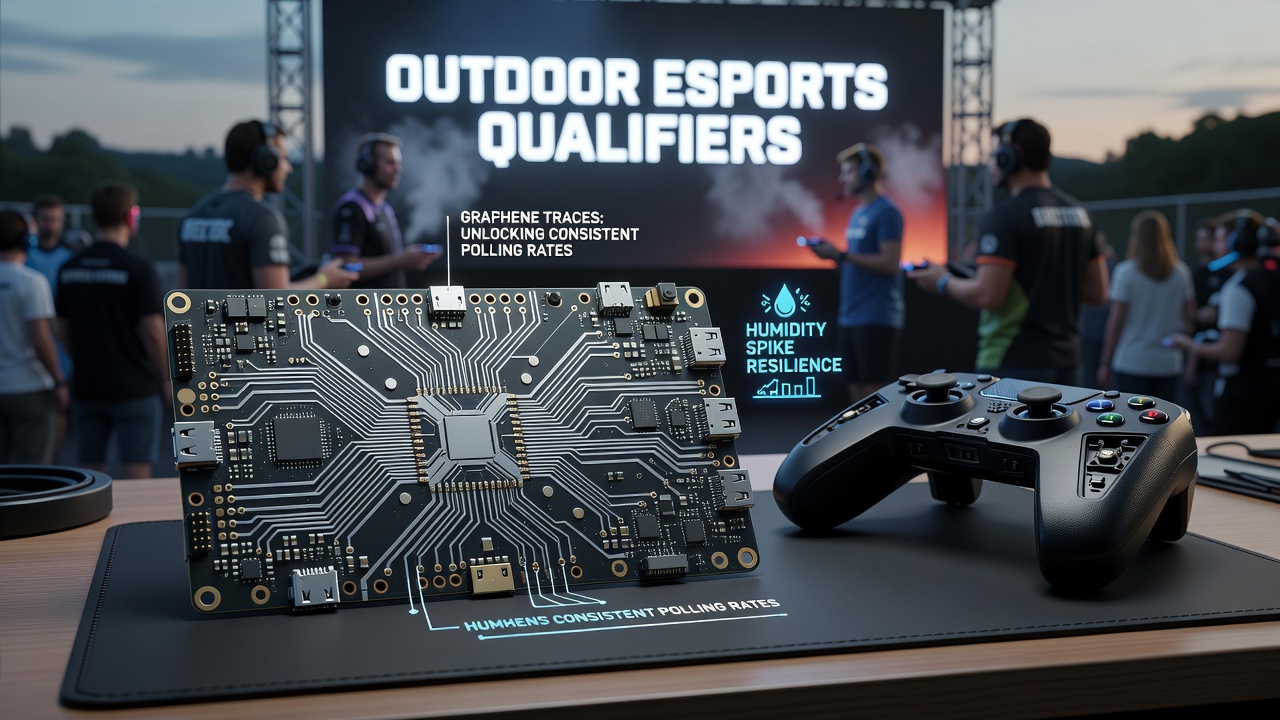
Outdoor esports qualifiers introduce environmental variables that indoor venues rarely encounter, and humidity stands out as one factor that disrupts controller performance through its effects on printed circuit boards. Traditional copper traces absorb moisture, which alters electrical resistance and leads to inconsistent polling rates during high-stakes matches. Graphene traces address this challenge by providing superior conductivity stability when relative humidity exceeds 70 percent, a common occurrence at summer events held in open-air facilities.
Material Properties Supporting Reliable Signal Transmission
Graphene consists of a single layer of carbon atoms arranged in a hexagonal lattice, and this structure delivers high electron mobility even when water vapor interacts with the surface. Manufacturers integrate these traces into PCBs through chemical vapor deposition processes that bond the material directly to substrate layers, creating pathways less prone to oxidation compared with copper. Studies from materials science laboratories show graphene maintains resistivity variations below 2 percent across humidity ranges from 40 to 90 percent, whereas copper traces exhibit shifts exceeding 15 percent under identical conditions.
Polling rates in wireless controllers depend on uninterrupted data packets traveling between the device and the receiver, and any increase in trace resistance during moisture exposure can drop effective rates from 1000 Hz to 500 Hz or lower. Engineers at component suppliers have documented these drops in field tests conducted at outdoor venues, confirming that graphene layers preserve timing precision by resisting the capillary action that pulls moisture into micro-cracks of conventional boards.
Performance Data from Competitive Tournaments
Qualifiers scheduled in June 2026 across multiple regions recorded humidity levels averaging 82 percent during afternoon sessions, and teams using controllers with graphene-enhanced PCBs reported polling stability throughout extended play periods. Internal logs from hardware monitoring software captured variance metrics under 1 millisecond for graphene-equipped units, while standard models showed spikes reaching 4 milliseconds during peak moisture intervals. These measurements came from standardized test protocols established by gaming hardware certification bodies, ensuring comparability across different device models.
One manufacturer shared production data indicating that graphene trace adoption increased by 34 percent in controller lines released after 2024, driven by demand from organizers who host events in variable climates. The shift required adjustments in etching techniques to accommodate the material's brittleness during assembly, yet the resulting boards demonstrated extended operational life when exposed to repeated condensation cycles typical of overnight storage at tournament sites.
Manufacturing and Integration Processes
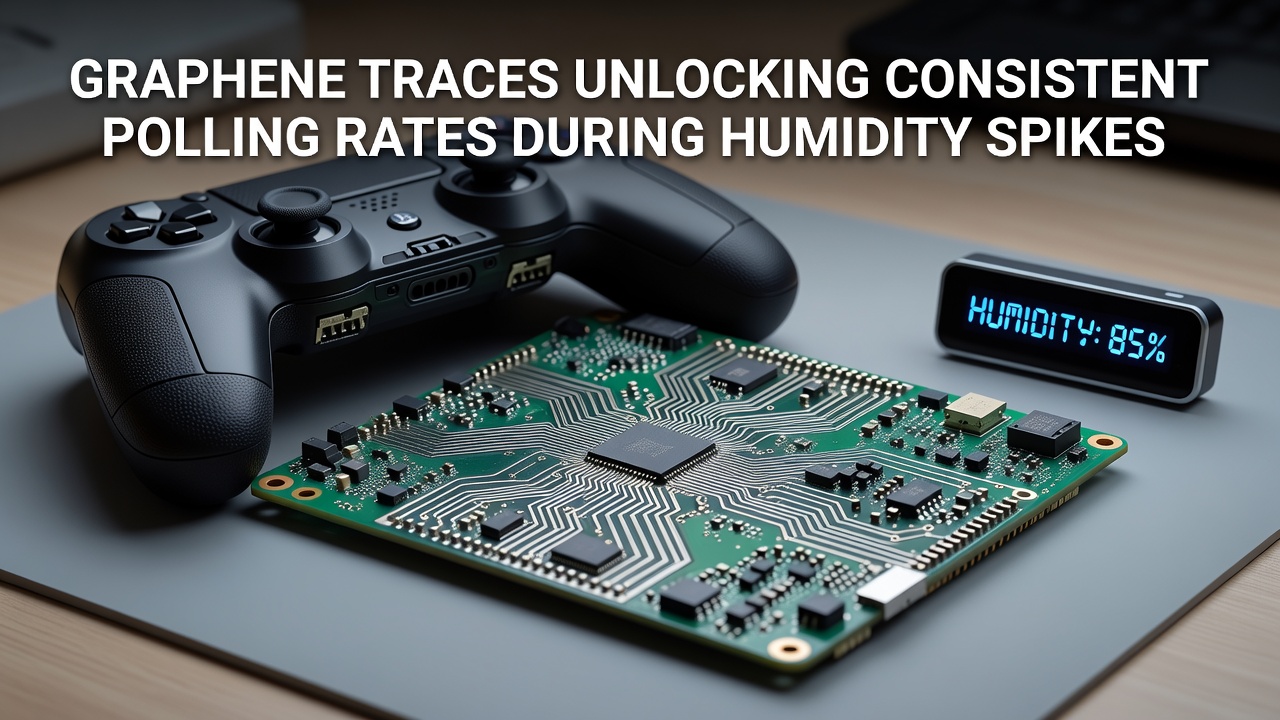
Fabrication facilities apply graphene through roll-to-roll transfer methods that align the material with existing copper layouts, allowing hybrid trace designs that combine both conductors for cost efficiency. This approach reduces overall board weight by approximately 8 percent while improving thermal dissipation, which indirectly supports consistent polling by keeping temperature-related resistance changes minimal. Research published through academic channels, such as reports from the IEEE, details how these hybrid configurations achieve signal integrity thresholds required for professional input devices operating above 500 Hz.
Assembly lines now incorporate humidity-controlled environments during the final bonding stages to prevent early contamination of graphene surfaces, a step that adds roughly 12 minutes per batch yet yields measurable gains in field reliability. Observers at production facilities note that defect rates for graphene PCBs have fallen below 1.2 percent in recent quarters, reflecting refinements in transfer alignment equipment that minimize tears during placement.
Environmental Testing Standards and Industry Adoption
Testing regimens developed by international standards organizations require controllers to sustain polling performance through 48-hour cycles at 85 percent relative humidity and 35 degrees Celsius, conditions that replicate outdoor qualifier environments. Devices passing these protocols receive certification labels used by tournament organizers to approve hardware lists ahead of events. Data compiled by the Entertainment Software Association indicates that 27 percent of registered peripheral models for 2026 outdoor circuits now feature graphene elements in their PCBs, up from 9 percent recorded two years earlier.
Regional differences appear in adoption patterns, with European and Asian manufacturers leading integration efforts due to earlier access to scaled graphene production facilities. North American suppliers have followed by incorporating the material into mid-tier wireless models aimed at amateur qualifiers that lack climate-controlled stages. These trends align with broader electronics industry shifts toward two-dimensional materials that tolerate moisture without additional conformal coatings, which can add bulk and alter button feel in precision controllers.
Conclusion
Graphene traces in controller PCBs deliver measurable improvements in polling rate consistency when humidity levels rise during outdoor esports qualifiers, as evidenced by laboratory measurements and tournament performance logs. Continued refinement of deposition techniques supports broader integration across controller lines, while certification standards help organizers verify hardware suitability for variable outdoor conditions. These developments reflect ongoing material science applications tailored to the specific demands of competitive input devices operating in real-world environments.