Eye Tracking Innovations Driving Narrative Immersion in Virtual Reality Adventures
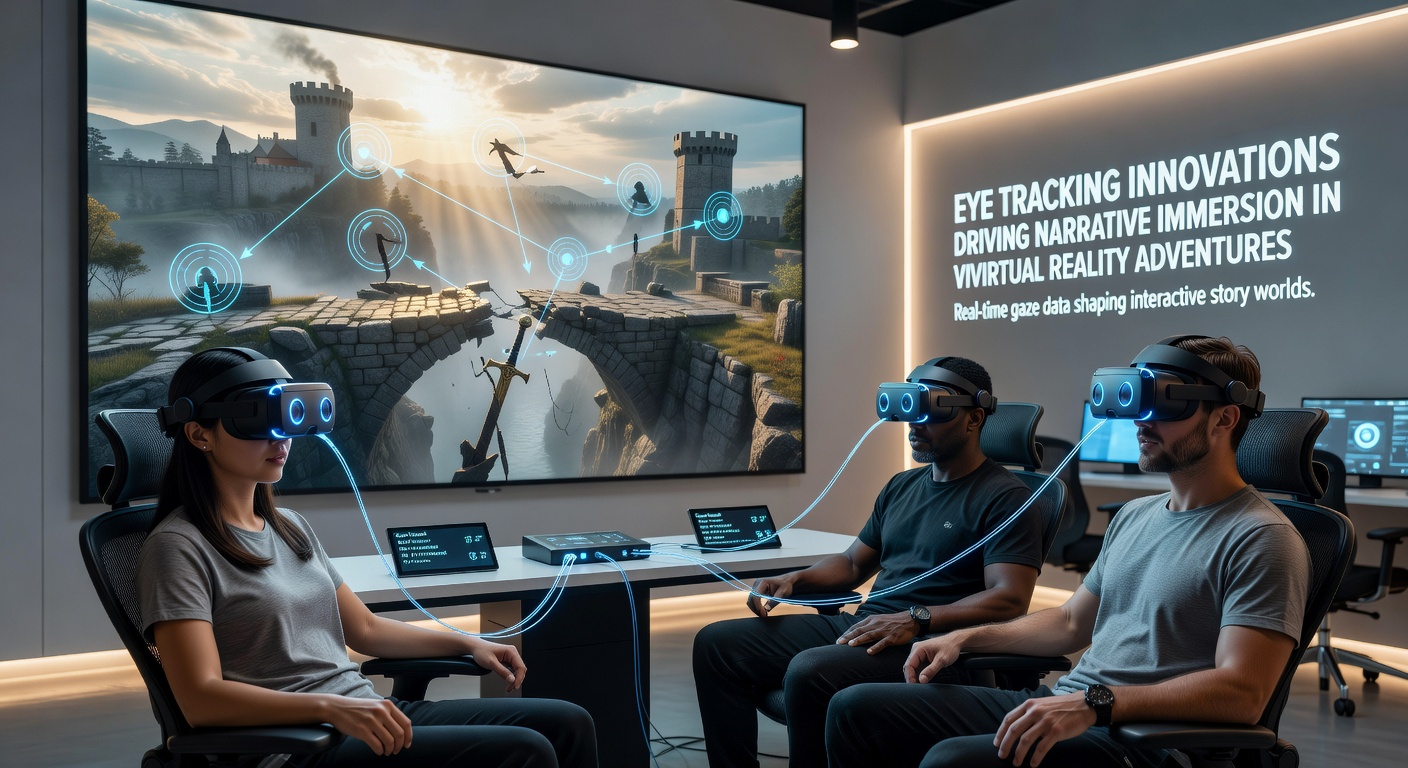
Eye tracking technology has advanced rapidly in virtual reality systems where sensors embedded in headsets capture precise pupil movements and fixation points to reshape how stories unfold during gameplay. Developers integrate these systems with narrative engines so that character responses and environmental changes react directly to user attention, creating branches that feel organic rather than scripted. Research from institutions across North America and Europe shows that such adaptations increase engagement metrics by allowing plots to pivot based on sustained gaze rather than button presses alone.
How Eye Tracking Alters Story Delivery
Traditional VR narratives rely on predefined triggers yet eye tracking introduces continuous data streams that adjust dialogue timing, camera angles, and object emphasis in real time. When a player lingers on a particular clue or character expression the system registers that focus and modifies subsequent scenes accordingly while peripheral details fade or intensify based on attention patterns. This approach draws from studies conducted at universities in Australia and Canada where test groups demonstrated improved recall of plot elements when gaze data guided scene pacing. Hardware improvements since 2024 have reduced calibration times to under thirty seconds while maintaining accuracy across varied lighting conditions inside headset displays.
Technical Components Behind the Immersion
Modern eye tracking modules combine infrared cameras with machine learning algorithms that predict saccades and fixations before they complete allowing seamless narrative shifts without noticeable latency. Data flows from these sensors into game engines through standardized APIs that map gaze coordinates to story variables such as character trust levels or environmental tension. Industry reports from organizations like the VR Association highlight that integration costs have dropped significantly as component sizes shrink and power efficiency rises. In June 2026 several major platforms released updated software development kits that bundle eye tracking support with existing locomotion tools so smaller studios can implement adaptive storytelling without custom engineering teams.
Observers note that these systems also support accessibility features where users with limited motor control navigate complex plots through gaze alone while the technology maintains consistent performance across different headset models from multiple manufacturers. Sensor fusion techniques combine eye data with head orientation and hand tracking to build richer context for narrative decisions such as determining whether a player examines an item out of curiosity or suspicion.
Case Examples from Recent Releases
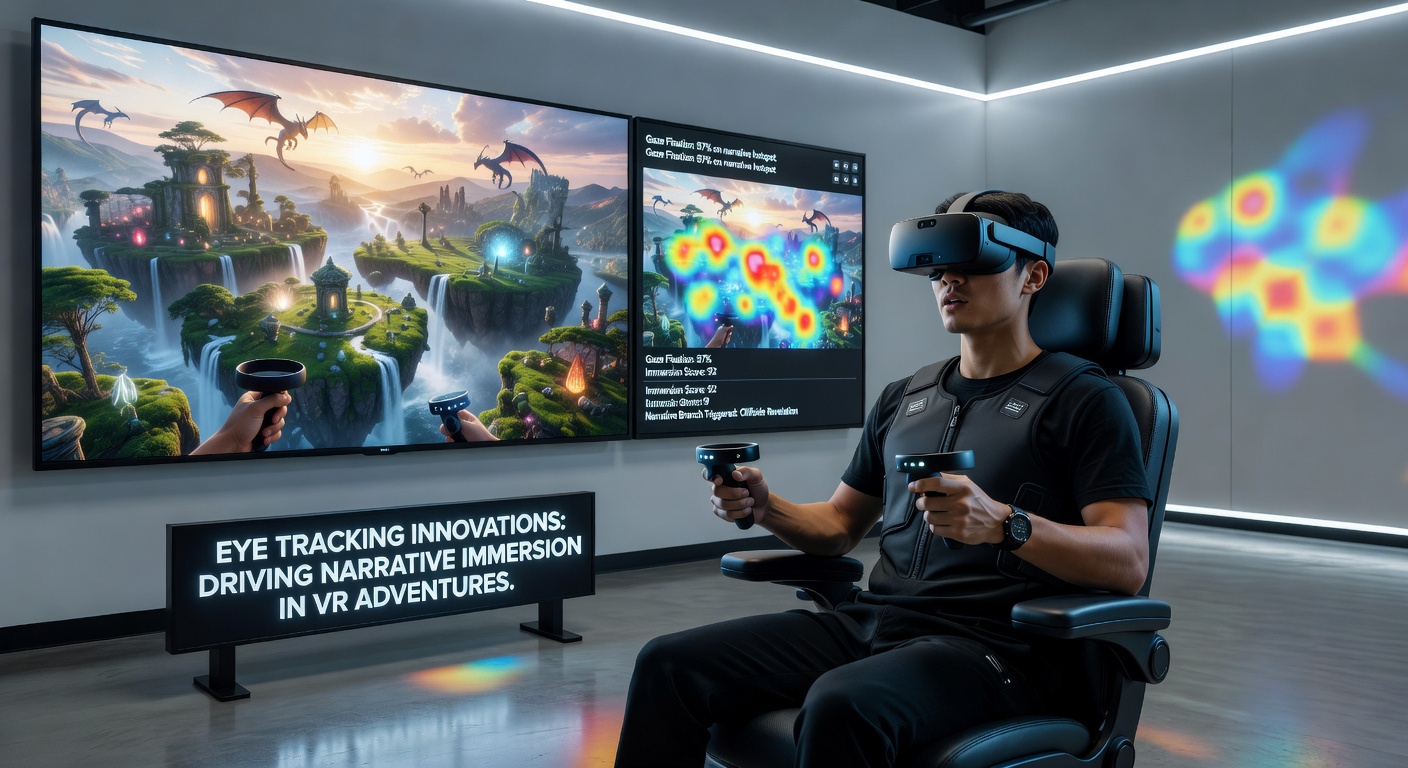
One adventure title released in early 2026 used eye tracking to let players influence companion relationships by choosing where to direct attention during conversations and the system logged fixation durations to adjust loyalty scores accordingly. Another project applied similar methods in exploration segments where hidden paths revealed themselves only when players maintained steady gaze on environmental clues for set durations creating discovery moments that rewarded observation rather than exhaustive searching. Data from these implementations according to IEEE research summaries indicated higher completion rates and fewer instances of players feeling lost in open environments.
European testing facilities documented how eye tracking reduced cognitive load during puzzle sequences by highlighting relevant objects subtly through lighting changes triggered by natural gaze patterns instead of on-screen prompts. Such refinements keep players inside the story world without breaking presence through overt interface elements.
Broader Industry Shifts in 2026
Hardware manufacturers have begun embedding higher resolution trackers as standard features in mid-range headsets expanding access beyond premium devices. Software frameworks now include built-in privacy controls that process gaze information locally before any anonymized aggregates reach analytics servers. Trade groups in Asia and the United States report growing adoption among independent developers who leverage cloud-based narrative tools to handle the computational demands of real-time adaptation. These developments coincide with improved battery life in standalone headsets allowing longer sessions where cumulative story changes based on eye data become more pronounced.
Academic collaborations continue to explore extensions such as combining eye tracking with biometric inputs like heart rate variability to modulate emotional intensity in key scenes. Figures from ongoing trials at research centers in the United Kingdom reveal consistent patterns where participants report stronger emotional connections to characters whose reactions align with observed attention.
Conclusion
Eye tracking continues to expand narrative possibilities in virtual reality by turning passive viewing into active influence over story progression. As calibration processes simplify and integration tools mature more creators gain the ability to craft experiences that respond fluidly to individual focus patterns. The result is a growing library of adventures where immersion stems directly from how technology interprets and reacts to user gaze within virtual spaces.