Engineers Calibrate Graphene-Enhanced Heat Spreaders to Stabilize Overclocked Components During Marathon Tournament Sessions in Compact Arena Environments
Clara Berger · Jul 23, 2026
Engineers Calibrate Graphene-Enhanced Heat Spreaders to Stabilize Overclocked Components During Marathon Tournament Sessions in Compact Arena Environments
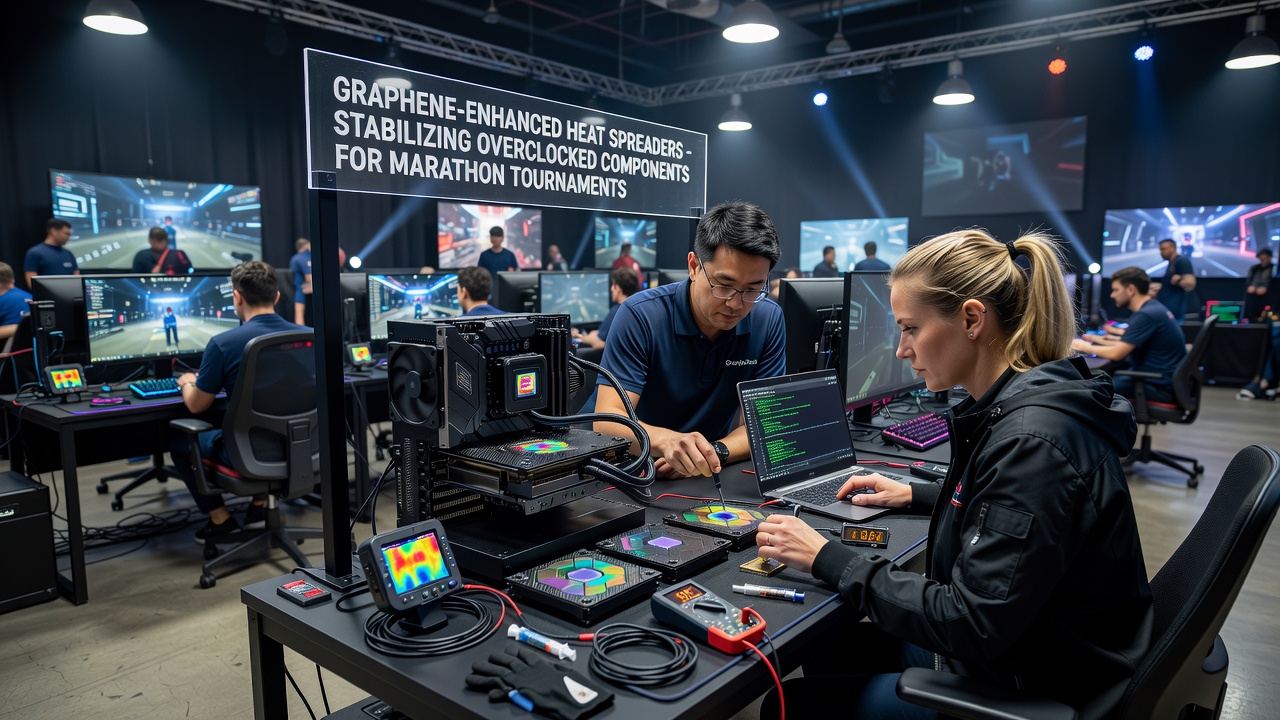
Engineers have turned to graphene-enhanced heat spreaders as a targeted solution for managing thermal loads in overclocked gaming hardware during extended esports events held in tight arena spaces, and these calibrations address heat buildup that occurs when processors and graphics cards run beyond standard specifications for hours on end. Data from industry reports shows that compact tournament venues often limit airflow options, which forces teams to rely on advanced materials that conduct heat away from critical components more efficiently than traditional copper or aluminum solutions.
Thermal Challenges in Arena Settings
Compact arena environments create unique constraints because multiple high-performance systems operate side by side with minimal spacing between stations, and this arrangement raises ambient temperatures quickly during marathon sessions that stretch across several days. Researchers at institutions such as the National Institute of Standards and Technology have documented how localized heat pockets form around overclocked CPUs and GPUs when fans and standard coolers reach their limits, leading to thermal throttling that disrupts consistent performance. Calibration of graphene layers involves precise layering techniques that maximize surface contact while maintaining electrical isolation, which allows heat to move laterally across the spreader before dissipation through attached vapor chambers or liquid loops.
Material Properties and Calibration Methods
Graphene sheets offer thermal conductivity values that exceed 5000 W/mK in ideal conditions, yet real-world integration requires engineers to adjust thickness, orientation, and bonding agents so the material performs reliably under tournament conditions. Teams measure junction temperatures at multiple points during simulated load tests that replicate the sustained demands of competitive play, and they fine-tune the spreader geometry until temperature gradients stay within safe operating ranges. In July 2026, several major esports circuits reported fewer hardware interruptions after adopting these calibrated components, with figures from event organizers indicating reduced downtime compared to previous years when conventional cooling dominated setups.
Integration with Existing Systems
Engineers integrate the graphene spreaders directly onto silicon dies or heat sinks using specialized adhesives that withstand repeated thermal cycling, and this approach avoids the bulk of older heat pipe designs that struggle in space-constrained rigs. Calibration routines often include software monitoring that tracks power draw alongside temperature data, allowing on-the-fly adjustments to fan curves or clock speeds when conditions shift during live matches. Observers note that such systems maintain stability even when ambient arena temperatures climb above 30 degrees Celsius, a common occurrence in venues filled with spectators and broadcasting equipment.
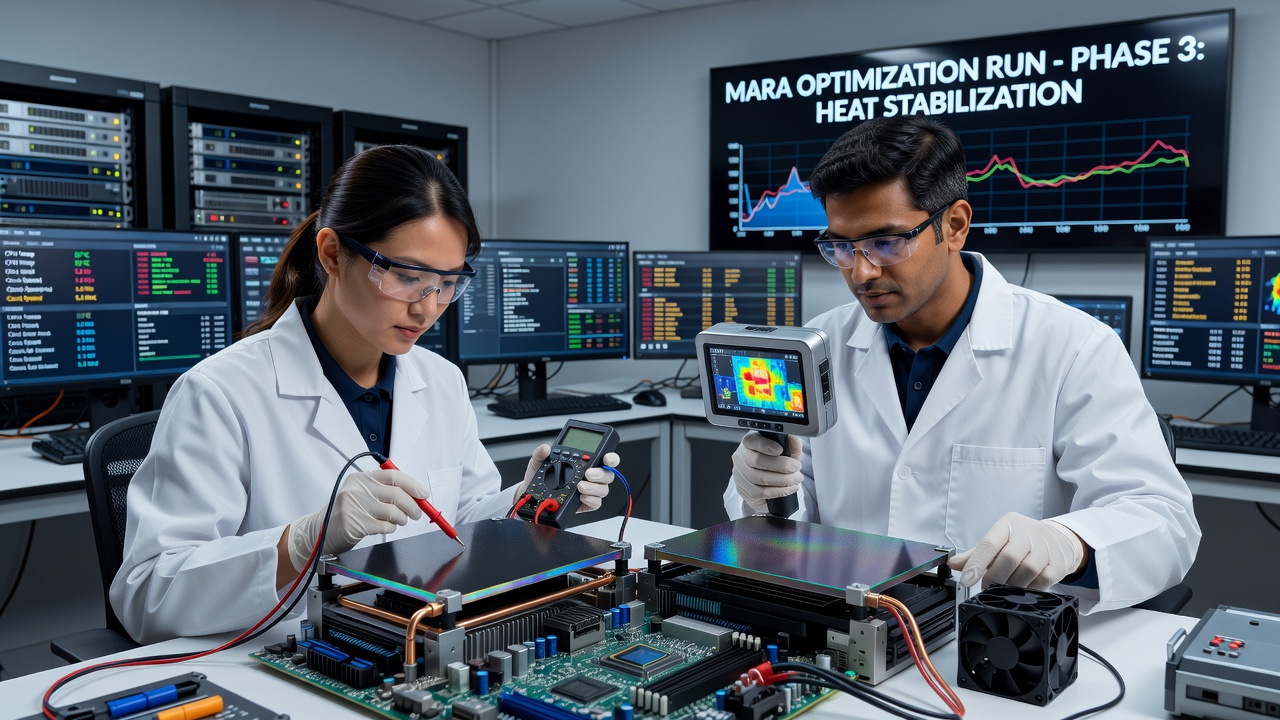
Studies conducted by university labs in Australia have examined how graphene composites interact with phase-change materials, revealing that hybrid assemblies can absorb and release heat in cycles that match the fluctuating workloads of tournament play. These findings support calibration protocols that position spreaders to channel heat toward exhaust paths rather than letting it accumulate near memory modules or voltage regulators. Technicians perform iterative testing with thermal imaging cameras to verify even distribution, and they record metrics such as peak delta-T values that guide final adjustments before equipment ships to event sites.
Performance Data from Recent Events
Performance logs from 2026 tournaments show that calibrated graphene solutions kept core temperatures below critical thresholds during sessions lasting eight hours or longer, whereas unenhanced systems experienced throttling events that affected frame rates and input responsiveness. Industry associations tracking hardware reliability have compiled datasets that link these improvements to higher uptime rates across multiple game titles, including those that push graphics cards to sustained high utilization. Calibration specialists emphasize the importance of matching spreader dimensions to specific motherboard layouts, since misalignment reduces contact efficiency and undermines the material's advantages.
Additional research from Canadian engineering centers has explored scalable manufacturing methods that lower production costs while preserving the high conductivity needed for esports applications, and these developments coincide with growing demand from teams that compete in regional circuits with limited venue infrastructure. Calibration processes now incorporate machine learning models that predict thermal behavior based on historical match data, which helps engineers preconfigure systems for expected load patterns without extensive manual intervention on site.
Future Calibration Trends
Engineers continue refining calibration parameters to accommodate newer chip architectures that feature higher transistor densities, and this work addresses the compounding heat issues that arise when multiple overclocked components share confined spaces. Data collected during July 2026 events provides benchmarks for comparing graphene-enhanced setups against emerging alternatives such as boron nitride composites, yet current figures indicate graphene maintains an edge in lateral heat spreading speed. Teams that adopt these calibrated components report more predictable hardware behavior across varying arena conditions, which supports consistent competitive outcomes during prolonged events.
Conclusion
Calibration of graphene-enhanced heat spreaders represents a focused engineering response to thermal management demands in compact esports environments, with documented applications showing stabilized operation of overclocked hardware throughout extended tournament schedules. Ongoing measurements from research bodies and event data continue to inform refinements that align material properties with the practical constraints of arena deployments, ensuring components remain within operational limits under sustained competitive loads.