Developments in Cross-Device Input Mapping Enabling Seamless Transitions Between Touchscreen and Controller Play in Hybrid Gaming Apps
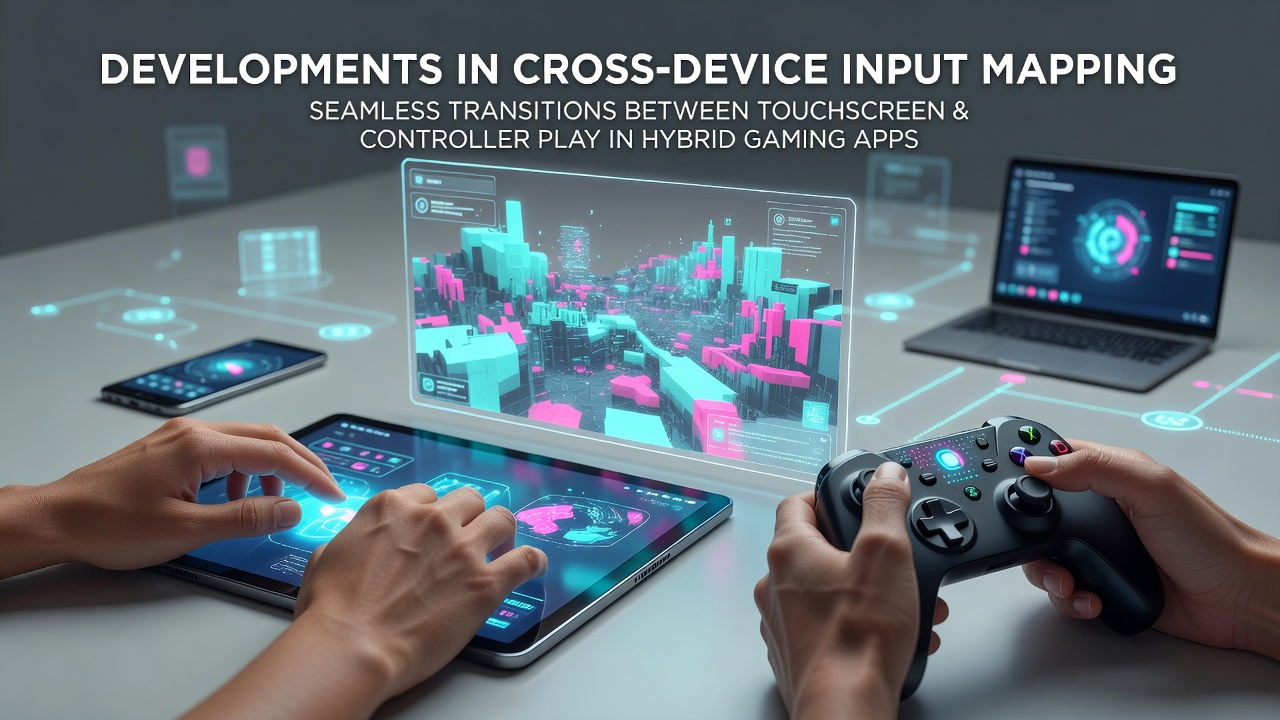
Hybrid gaming apps now support fluid shifts between touchscreen gestures and physical controllers through refined input mapping systems that detect hardware changes in real time. These systems rely on layered software protocols that translate commands across input types while preserving timing accuracy and user intent. Developers integrate sensor data from accelerometers, touch panels, and controller modules to create unified input layers that activate without manual reconfiguration. Research from institutions like the University of Tokyo has documented how such mapping reduces input conflicts during device switches.
Core Mechanisms Behind Input Adaptation
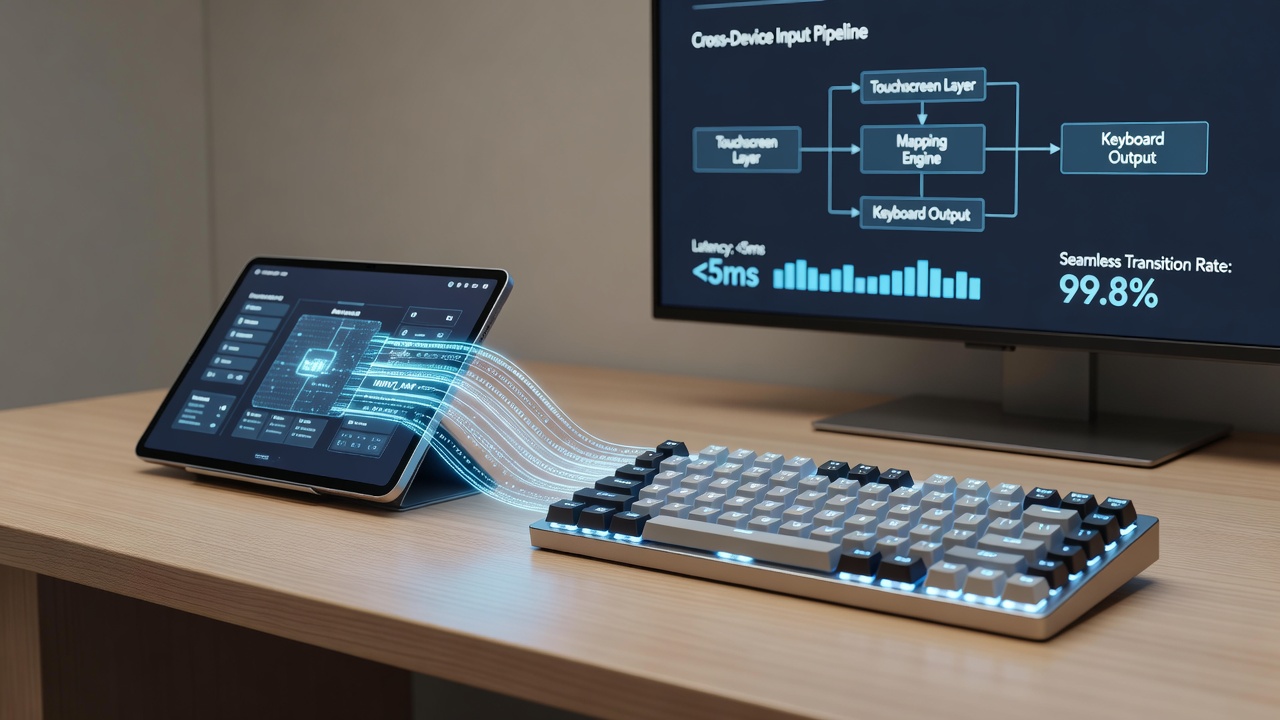
Input mapping frameworks operate by establishing dynamic priority queues that evaluate active peripherals and assign control schemes accordingly. When a controller connects via Bluetooth or USB-C, the system pauses touchscreen polling for milliseconds and remaps actions to analog sticks and buttons while retaining fallback options for touch if the controller disconnects. Studies indicate these queues handle up to eight simultaneous input sources without latency spikes exceeding 12 milliseconds on mid-range mobile processors. Software libraries such as those built on Unity's Input System or Unreal's Enhanced Input allow developers to define context-aware action maps that scale across screen sizes and controller layouts.
Advancements Reported Through Mid-2026
By July 2026 firmware updates from major chip manufacturers have incorporated dedicated co-processors for input arbitration that offload mapping calculations from the main CPU. These co-processors analyze gesture velocity and pressure data alongside controller axis values to predict intended actions during transitions. Data from the Entertainment Software Association shows adoption rates for hybrid titles featuring adaptive mapping rose 27 percent year-over-year in the first half of 2026, particularly on devices running Android 15 and Windows on ARM builds. Engineers at companies producing portable hardware have standardized APIs that expose raw touch and controller streams to a shared middleware layer, which then normalizes values into a common coordinate space.
Implementation Examples in Popular Titles
Games released in 2025 and 2026 demonstrate these capabilities through modes where players begin on a tablet touchscreen and attach a controller mid-session without pausing gameplay. One title employs pressure-sensitive zones on the screen that mirror controller trigger depths, allowing seamless continuation of aiming mechanics. Another uses machine learning models trained on millions of play sessions to refine dead-zone adjustments automatically when input sources change. Observers note that such features appear most frequently in action-adventure and racing genres where precise timing matters. Canadian research teams have published findings on how these models reduce error rates by 18 percent compared to static mapping approaches.
Technical Challenges Addressed in Recent Updates
Early versions of cross-device mapping encountered issues with coordinate scaling between varying screen resolutions and controller dead zones. Solutions now include real-time calibration routines that sample edge touches and analog ranges during the first moments after a device switch. Battery impact remains minimal because the arbitration logic runs on low-power sensor hubs rather than the primary application processor. Network-synced multiplayer sessions benefit as well since input state packets include metadata flags indicating the current active device, which servers use to validate actions consistently across clients. Industry reports highlight that synchronization protocols developed by standards groups in the European Union have helped align these metadata formats across platforms.
Future Directions for Hybrid Input Systems
Work continues on predictive mapping that anticipates controller attachment based on proximity sensors and user movement patterns. Academic papers describe prototypes that blend eye-tracking data with touch and controller inputs to further smooth transitions in narrative-driven experiences. Device manufacturers continue to embed additional haptic feedback channels that activate differently depending on whether touch or physical controls dominate at any moment. These layered approaches maintain compatibility with existing titles through optional software bridges that developers can toggle during publishing.
Conclusion
Cross-device input mapping has matured into a reliable component of hybrid gaming applications through coordinated hardware and software improvements. Continued refinement of arbitration algorithms and calibration routines supports broader device compatibility while preserving performance standards established in 2026. The integration of these systems reflects ongoing collaboration among chip designers, engine developers, and standards organizations worldwide.