Decentralized Networks Transform Latency Handling in Global Mobile Arena Battles
Eden Griffin · Aug 16, 2026
Decentralized Networks Transform Latency Handling in Global Mobile Arena Battles
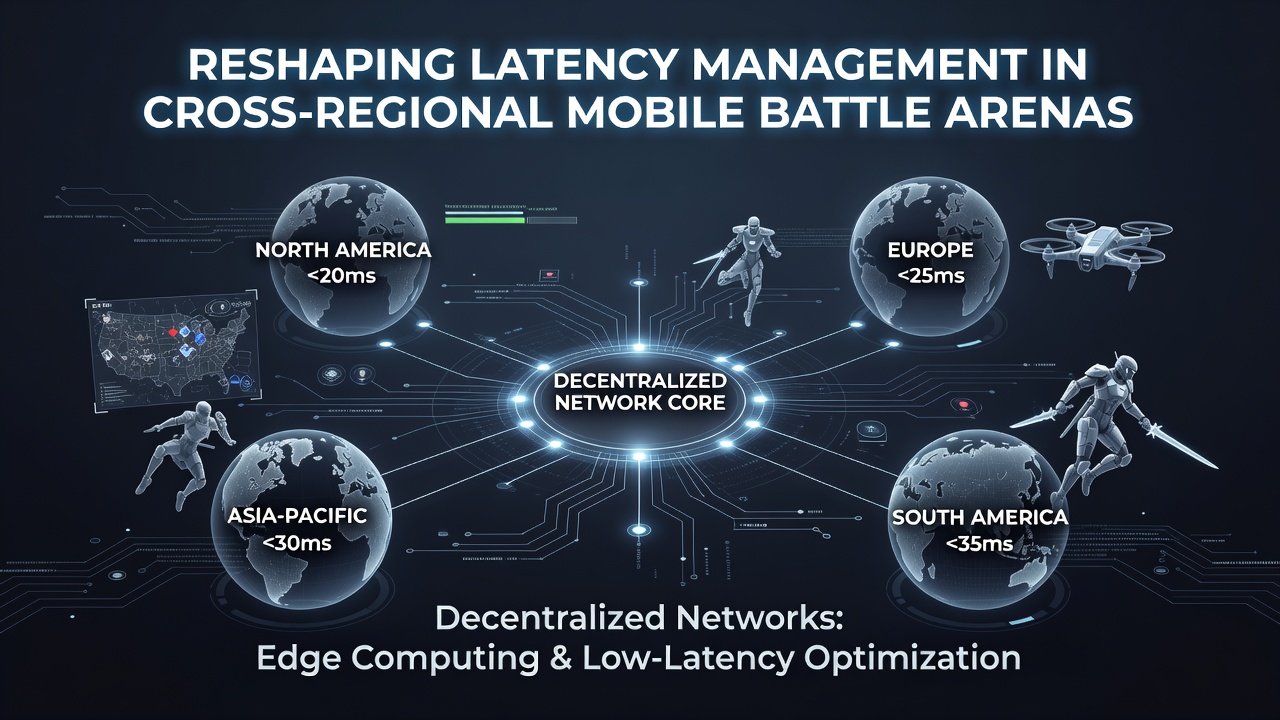
Cross-regional matches in mobile battle arena titles have long faced hurdles from centralized server infrastructure, where data packets travel long distances through fixed hubs and create noticeable delays for players in distant locations. Decentralized networks address these issues by distributing routing tasks across multiple independent nodes that adapt in real time, and this shift has gained momentum in competitive scenes by August 2026.
Core Challenges with Centralized Systems
Traditional setups route all player actions through a single regional server cluster, so matches between participants in Asia and Europe often encounter base latencies exceeding 150 milliseconds according to data from the International Telecommunication Union. Packet loss compounds during peak hours when multiple regions connect simultaneously, and this leads to desynchronized game states that affect abilities and positioning in fast-paced titles. Observers note that these bottlenecks have persisted even as 5G infrastructure expanded, because the underlying server architecture remained concentrated in key data centers.
How Decentralized Architectures Operate
Decentralized approaches break the single-point model by deploying edge nodes operated by various providers and participants, allowing traffic to hop through the nearest available relay instead of a distant hub. Protocols based on distributed ledger technology help coordinate node availability and route selection without a central authority, while peer-to-peer overlays handle direct data exchange for non-critical elements like cosmetic updates. Research from the University of Sydney indicates that such systems can cut average cross-continental latency by 40 to 60 percent in controlled tests involving mobile devices.
Dynamic path selection becomes possible because each node reports its current load and connection quality to a shared consensus layer, and algorithms then choose the optimal sequence of relays for each match session. This process runs continuously, so a player moving between urban and rural areas experiences automatic adjustments without manual intervention. Figures from the GSMA reveal that adoption of these routing methods in mobile gaming has risen sharply since 2024 as operators integrated compatible APIs into existing 5G cores.
Practical Effects in Tournament Environments
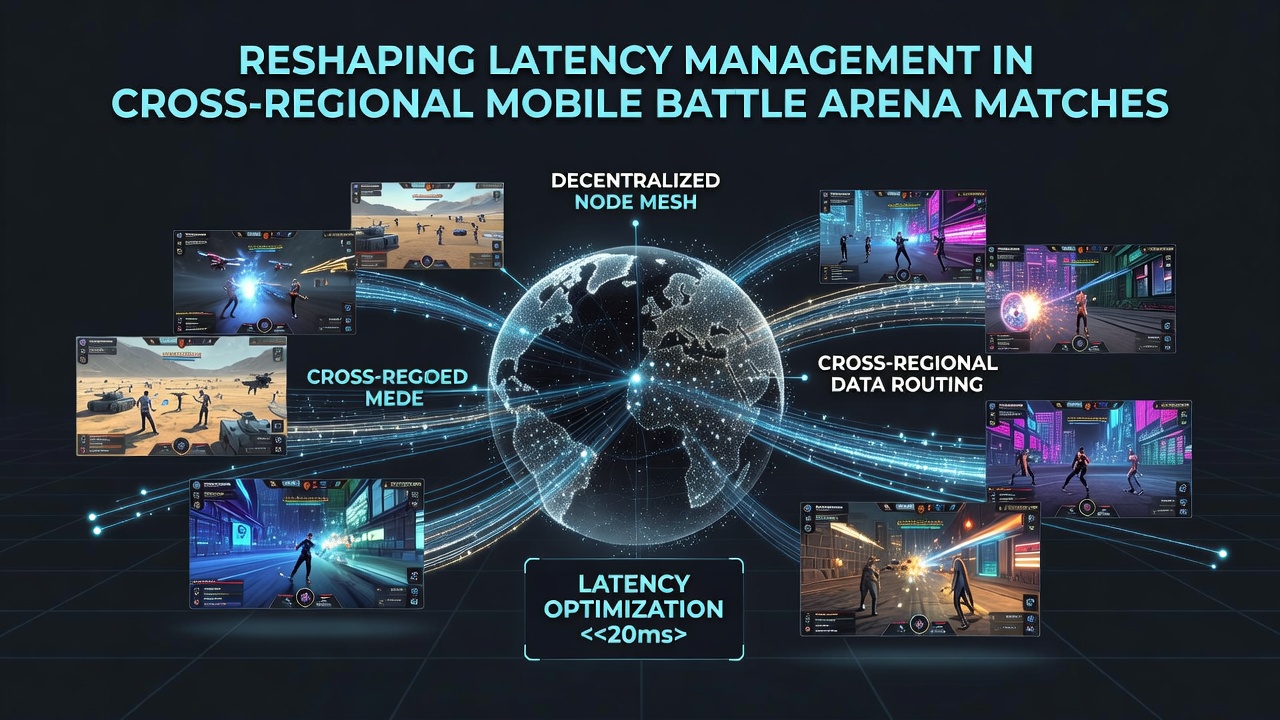
Professional circuits that span multiple continents have integrated decentralized routing layers into their match platforms, and this change shows up in more consistent frame timing and fewer rollback events during live events. One documented series in mid-2026 used a hybrid setup where initial matchmaking occurred on centralized coordinators while actual gameplay traffic moved across distributed nodes, resulting in measured improvements in round-trip times for over 70 percent of participating teams. Engineers continue to refine the consensus mechanisms to prevent any single node from becoming a bottleneck, and this work draws on earlier experiments with mesh networking in non-gaming applications.
Data synchronization across regions benefits as well, since decentralized ledgers maintain a tamper-resistant record of game events that multiple nodes can verify independently. This reduces the window for desync issues when a player from one continent joins a lobby hosted primarily in another, and it supports features like real-time spectator views without adding extra strain on any central point. Those who have studied these implementations point to the reduced dependency on undersea cable reliability as a key factor in stability gains during high-traffic periods.
Integration with Existing Mobile Infrastructure
Mobile carriers have begun offering opt-in decentralized routing for gaming traffic through dedicated slices on their networks, and this allows devices to switch seamlessly between standard connections and node-assisted paths based on detected latency thresholds. Software development kits provided by several battle arena publishers include hooks for these features, so players do not need separate applications to benefit. Tests conducted in North American and European markets during 2025 demonstrated that the added overhead from node discovery stays below 5 milliseconds in most cases, preserving the responsiveness gains from shorter routes.
Security considerations receive attention through encrypted tunnels between nodes and periodic audits of the consensus layer, which prevents unauthorized rerouting while maintaining performance. Regulatory frameworks in various regions now include guidelines for decentralized gaming traffic, ensuring that consumer protections around data handling extend to these newer architectures without restricting the latency benefits.
Conclusion
Decentralized networks continue to evolve as a practical response to the demands of cross-regional mobile battle arena competition, with measurable reductions in latency and improved session stability documented across multiple deployments by August 2026. Ongoing refinements in node coordination and carrier integration point toward broader availability in both casual and professional play, supported by data from international standards bodies and academic evaluations.