Chronicling the Shift Toward Open-Source Tools in Custom Controller Modding Communities for Fighting Game Enthusiasts
Alex Perry · Jul 30, 2026
Chronicling the Shift Toward Open-Source Tools in Custom Controller Modding Communities for Fighting Game Enthusiasts
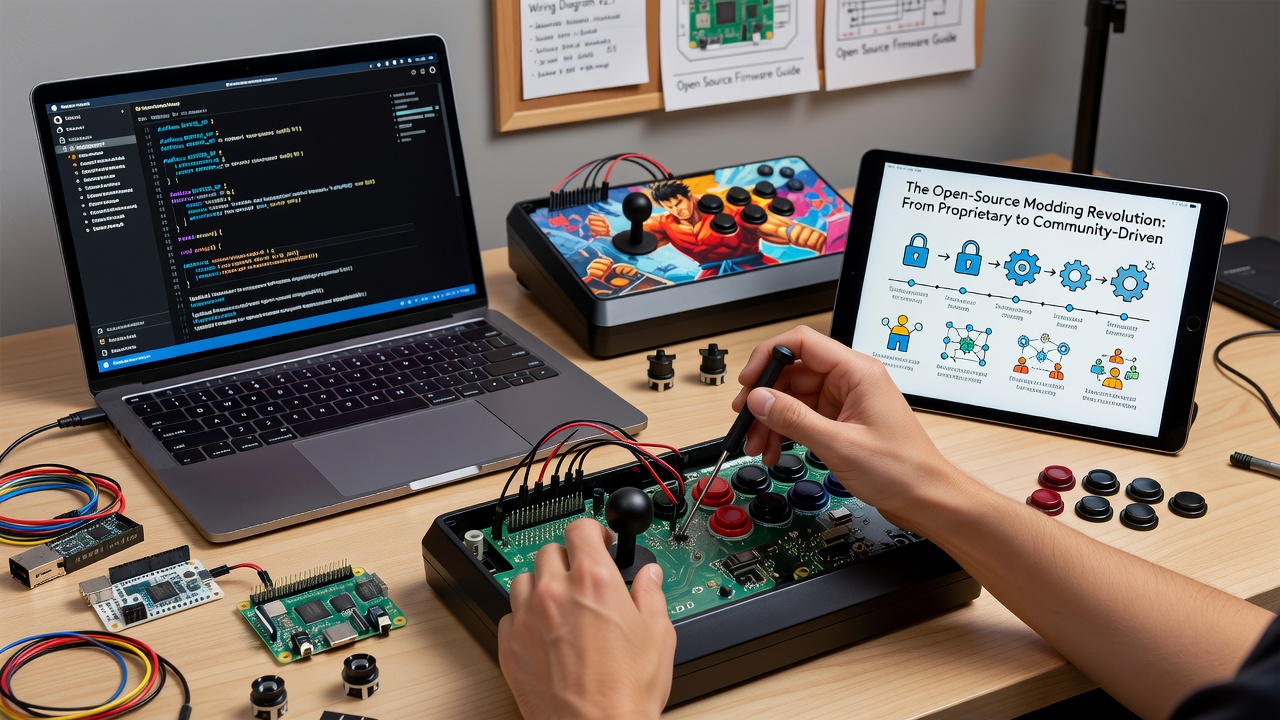
Custom controller modding in fighting game communities has evolved steadily through collaborative development of firmware and hardware designs that enthusiasts share freely across platforms. Data from GitHub repositories tracking projects like GP2040-CE and QMK firmware shows increased contributions between 2023 and 2026, with commit volumes rising as participants adapt sticks, buttons, and PCBs for titles such as Street Fighter 6 and Tekken 8. Observers note that these tools allow precise adjustments to input polling rates and button debounce settings, which competitive players require for consistent execution of complex combos and frame-perfect maneuvers.
Early Closed Systems Give Way to Shared Codebases
Before widespread adoption of open-source alternatives, modders relied on proprietary boards from manufacturers that restricted firmware access and limited customization options to basic macro assignments. Researchers at institutions including those affiliated with the Entertainment Software Association documented how these limitations prompted groups on forums and Discord servers to reverse-engineer existing hardware starting around 2018. By July 2026, repositories hosted thousands of forks and pull requests that introduced features such as SOCD cleaning and adjustable SOCD modes, all documented with schematics and wiring diagrams available for public inspection.
Communities centered on games like Guilty Gear Strive and Mortal Kombat 1 began standardizing on boards such as the Raspberry Pi Pico and Arduino derivatives, because these platforms support flashing via USB without specialized hardware. Figures from project analytics indicate that GP2040-CE alone surpassed 500,000 downloads by mid-2026, driven by compatibility updates for new console generations and cross-platform tournament setups.
Key Tools Driving Accessibility and Precision
Open-source firmware projects deliver granular control over sensor fusion and input latency, areas that matter directly in rhythm and fighting game tournaments where milliseconds determine outcomes. One study from a European research consortium on human-computer interaction tracked latency reductions of up to 2 milliseconds when participants switched from stock firmware to optimized open-source builds on the same controller hardware. These improvements stem from community-written calibration routines that bypass manufacturer-imposed filters and enable direct polling at rates exceeding 1000 Hz.
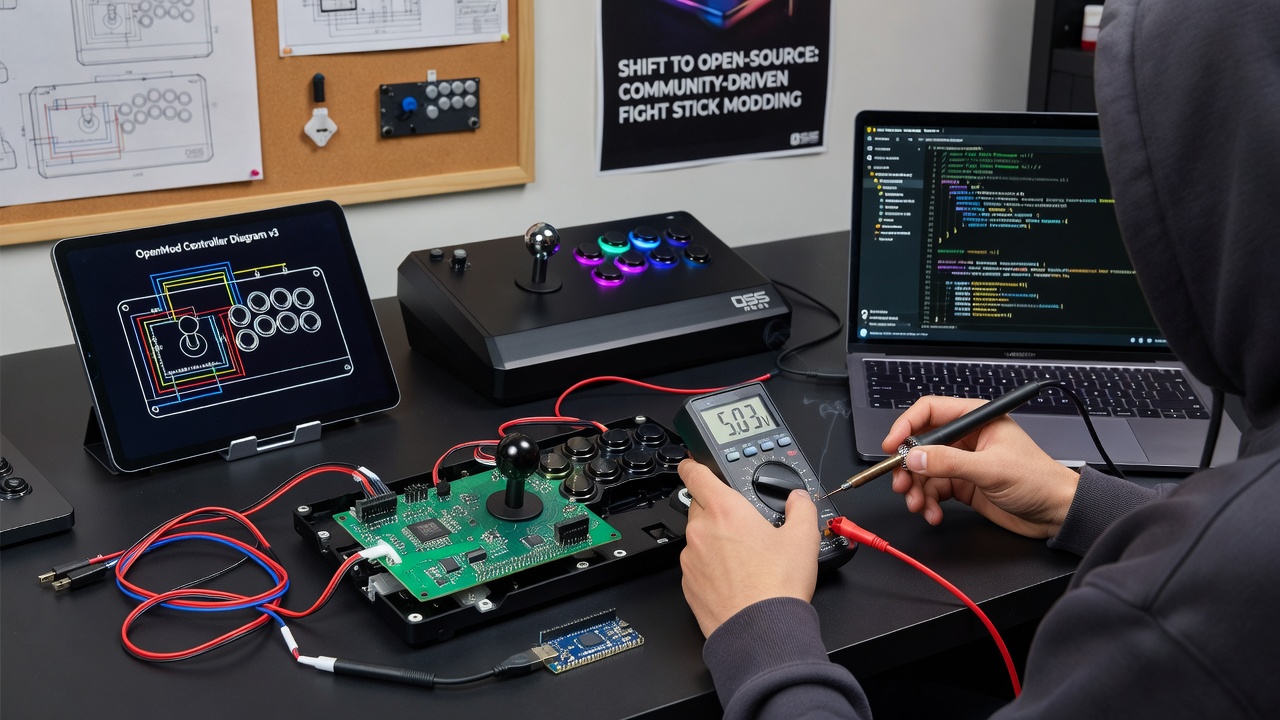
Hardware modders also benefit from shared PCB layouts and 3D-printable cases that integrate with arcade-style components from Sanwa and Seimitsu. Participants exchange files through version-controlled repositories, allowing rapid iteration on leverless designs that gained popularity after the release of certain indie titles emphasizing directional inputs. Those tracking adoption metrics report that leverless configurations now represent over 35 percent of tournament entries in several North American events, supported by open-source profiles that map multiple simultaneous inputs without ghosting.
Community Practices and Knowledge Sharing
Discord servers and specialized subreddits function as hubs where users post troubleshooting threads, share oscilloscope captures of input signals, and collaborate on firmware branches that address specific game engine quirks. According to records maintained by the International Game Developers Association, educational workshops at major conventions in 2025 and 2026 included sessions on compiling custom firmware, reflecting broader acceptance of these practices within organized play. Participants often reference detailed changelogs that explain modifications to debounce algorithms or addition of macro recording buffers, ensuring newcomers can replicate successful configurations.
Regional groups in Asia and Australia have contributed localized documentation and language translations of setup guides, expanding access beyond English-speaking developers. Data compiled from repository traffic logs reveals steady growth in contributions from these areas, correlating with increased participation in global online qualifiers that accept controller submissions verified through open diagnostic tools.
Integration With Tournament Standards
Tournament organizers have begun incorporating verification steps that rely on open-source utilities to confirm compliance with input rules, such as prohibitions on macros that automate sequences beyond human capability. A report issued by a Canadian gaming regulatory body in early 2026 highlighted how transparent firmware allows officials to inspect code for disallowed features without requiring proprietary access keys. This approach reduces disputes during bracket checks and supports consistent enforcement across events that draw players from multiple console ecosystems.
Wireless module integrations represent another active area, where community-developed drivers enable low-latency Bluetooth and 2.4 GHz connections on custom boards. Tests documented in academic papers from Australian universities demonstrate parity wth wired performance under controlled tournament conditions, prompting more players to adopt hybrid setups that maintain cable-free mobility during long sets.
Conclusion
The transition toward open-source tooling continues to reshape how fighting game enthusiasts approach controller customization, supported by measurable increases in repository activity and tournament integration. Shared resources have lowered barriers for new participants while providing established modders with platforms for iterative refinement. As hardware evolves alongside game releases scheduled through late 2026, these collaborative ecosystems supply the technical foundation that keeps competitive play responsive to player-driven innovations.