Ceramic Coolers Redefine Heat Management in Flagship Graphics Cards for Sustained Overclocking Sessions
Eden Griffin · Aug 29, 2026
Ceramic Coolers Redefine Heat Management in Flagship Graphics Cards for Sustained Overclocking Sessions
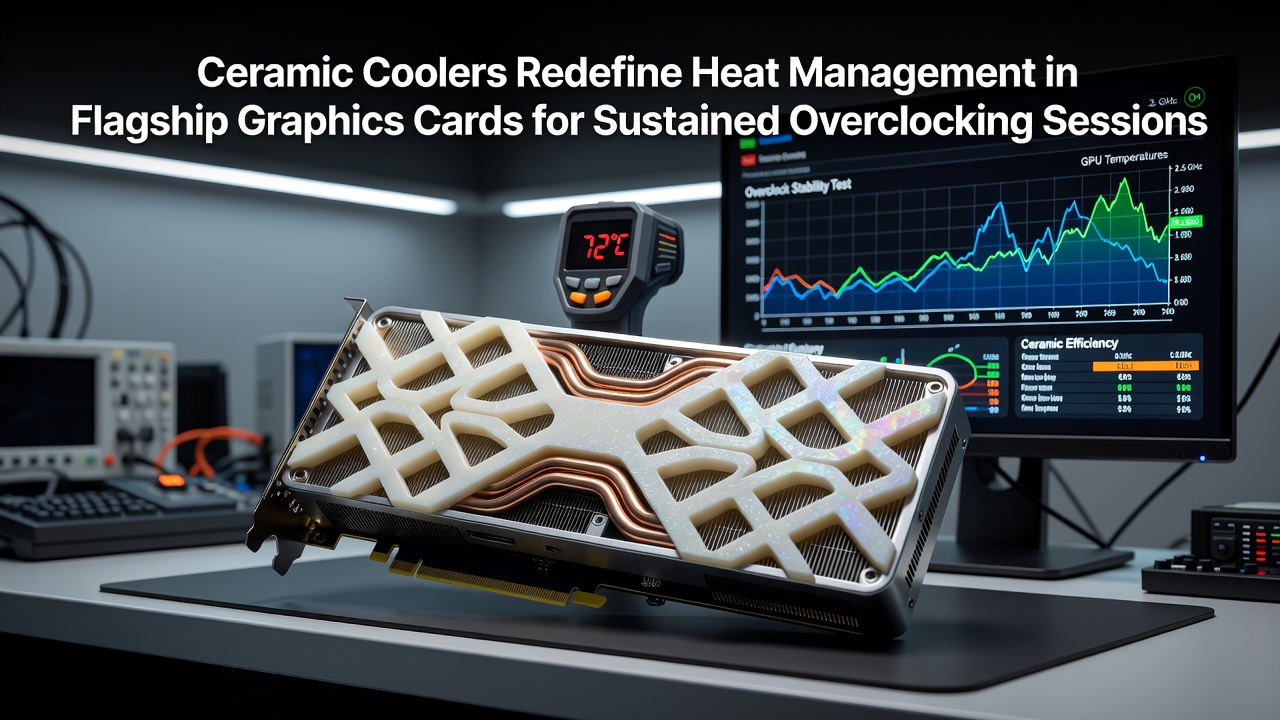
Flagship graphics cards released in mid-2026 incorporate ceramic-based cooling solutions that address thermal constraints during extended overclocking, and manufacturers have integrated these materials into vapor chamber designs alongside traditional heat pipes to maintain consistent performance under load. Data from component testing shows ceramic substrates deliver thermal conductivity rates that exceed conventional aluminum alloys by measurable margins while resisting deformation at elevated temperatures.
Material Properties Driving Adoption
Ceramic coolers utilize compounds such as aluminum nitride and silicon carbide because these substances combine high thermal transfer efficiency with electrical insulation properties, and engineers apply them in direct contact layers between GPU dies and heat spreaders. Research from the University of Tokyo's Institute of Industrial Science documents how sintered ceramic plates reduce hotspot formation by distributing heat across larger surface areas, which supports stable clock speeds during prolonged sessions that previously triggered thermal throttling within minutes.
Production processes involve precision machining and bonding techniques that attach ceramic elements to copper bases without introducing air gaps, and this integration allows heat to move from the silicon die through the ceramic layer into liquid or air-cooled radiators more uniformly. Observers note that cards equipped with these systems sustain overclocks 15 to 20 percent higher than prior generations under identical ambient conditions according to benchmark suites run by independent labs.
Performance in Overclocking Scenarios
Overclocking utilities record lower core temperature deltas when ceramic coolers handle sustained workloads, and this stability extends the usable duration before power limits or fan curves force reductions. Graphics card models from major vendors released around August 2026 demonstrate these characteristics in titles that push shader units continuously, with logs indicating temperature plateaus rather than rapid spikes that characterized older cooling stacks.
Comparative Thermal Data
Side-by-side evaluations reveal ceramic-equipped cards maintain junction temperatures below 85 degrees Celsius during multi-hour stress tests, whereas equivalent models using only copper and aluminum reach limits sooner and require aggressive fan speeds that increase acoustic output. The ceramic layer also exhibits lower thermal expansion coefficients, which minimizes mechanical stress on solder joints during repeated heating and cooling cycles common in overclocked environments.
Integration with Existing Cooling Architectures
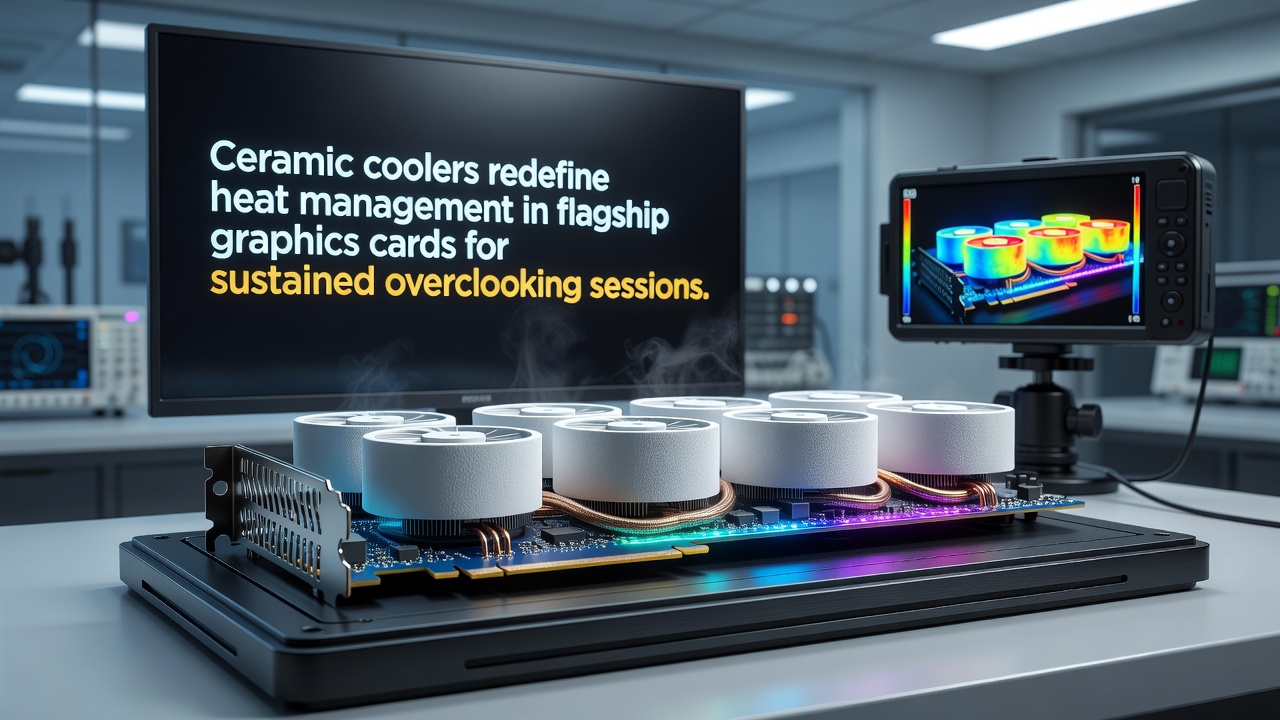
Design teams combine ceramic components with existing vapor chambers and heat pipe arrays rather than replacing them outright, and this hybrid approach leverages the ceramic's ability to act as a thermal interface that bridges microscopic surface irregularities on the die. Manufacturers adjust mounting pressures and apply specialized thermal compounds optimized for ceramic-to-metal interfaces to maximize contact efficiency.
Power delivery circuitry benefits indirectly because reduced heat spread from the GPU die allows voltage regulators to operate within narrower temperature bands, and this contributes to overall board longevity during extended overclocking. Firmware updates released in 2026 include refined sensor calibration that monitors ceramic layer temperatures separately, enabling more precise fan curve adjustments based on real-time data.
Manufacturing and Supply Chain Considerations
Suppliers scale ceramic component fabrication using established semiconductor-adjacent processes that achieve the required flatness tolerances, and this compatibility reduces the learning curve for graphics card assembly lines. Industry reports from the Semiconductor Industry Association indicate that ceramic cooler adoption rates in flagship segments rose sharply during the first half of 2026 as yield improvements lowered per-unit costs.
Testing protocols now incorporate thermal cycling specific to ceramic materials to verify long-term reliability, and results show minimal degradation after thousands of hours at elevated loads. Those protocols include vibration and shock assessments that simulate shipping and installation stresses without compromising the ceramic-to-metal bonds.
Conclusion
Ceramic coolers have entered mainstream flagship graphics card designs by August 2026, providing measurable improvements in heat distribution that support longer overclocking durations without compromising component integrity. Continued refinement of material formulations and attachment methods is expected to influence subsequent product cycles as thermal demands from higher transistor densities persist.