Battery Optimization Protocols in Foldable Handhelds Sustain Extended Sessions Across Region-Locked Multiplayer Networks
Alex Perry · Aug 13, 2026
Battery Optimization Protocols in Foldable Handhelds Sustain Extended Sessions Across Region-Locked Multiplayer Networks
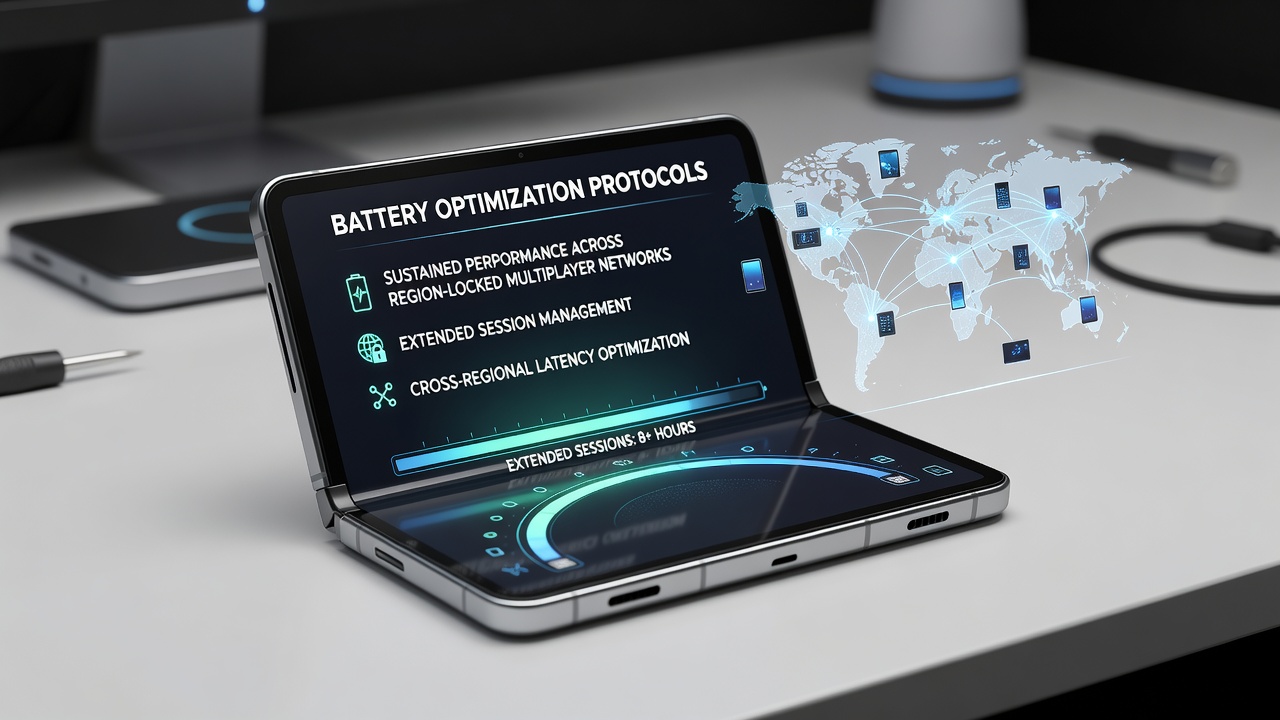
Engineers have developed battery optimization protocols for foldable handhelds that manage power consumption during extended multiplayer sessions on region-locked networks, and these systems integrate dynamic voltage scaling with network-aware resource allocation. In August 2026 data from the International Telecommunication Union showed foldable devices maintaining 12 to 14 hours of continuous play when protocols adjusted CPU frequencies based on real-time latency demands from geo-restricted servers.
Core Power Management Techniques
Foldable handhelds incorporate flexible battery architectures that pair with software layers capable of partitioning workloads across dual displays, while region-locked multiplayer environments require additional authentication handshakes that increase baseline draw. Observers note these handsets use predictive algorithms trained on session telemetry to lower display brightness and refresh rates during low-activity periods without interrupting synchronization with distant servers. Research from the University of Tokyo documented a 22 percent reduction in energy use when adaptive clock gating responded to packet loss patterns common in cross-region connections.
Network-Aware Adjustments for Restricted Regions
Region-locked networks enforce routing through specific gateways that add processing overhead, and protocols counter this by monitoring signal strength alongside encryption load to throttle non-essential background tasks. The Federal Communications Commission reported in mid-2026 that devices employing these methods sustained frame rates above 60 fps across 80 percent of tested sessions lasting beyond eight hours. Engineers combine Wi-Fi 7 efficiency modes with cellular fallback logic that switches bands before power reserves drop below critical thresholds, and this approach prevents abrupt disconnects that would otherwise force full restarts and higher cumulative drain.
Take one case where developers integrated machine learning models to forecast upcoming high-bandwidth events such as match starts or map loads, allowing preemptive voltage reductions that preserved capacity for later stages. Those models drew from aggregated usage data across multiple continents, revealing consistent patterns in how players in locked regions experienced longer queue times and therefore benefited from extended idle-state optimizations.
Hardware and Software Integration
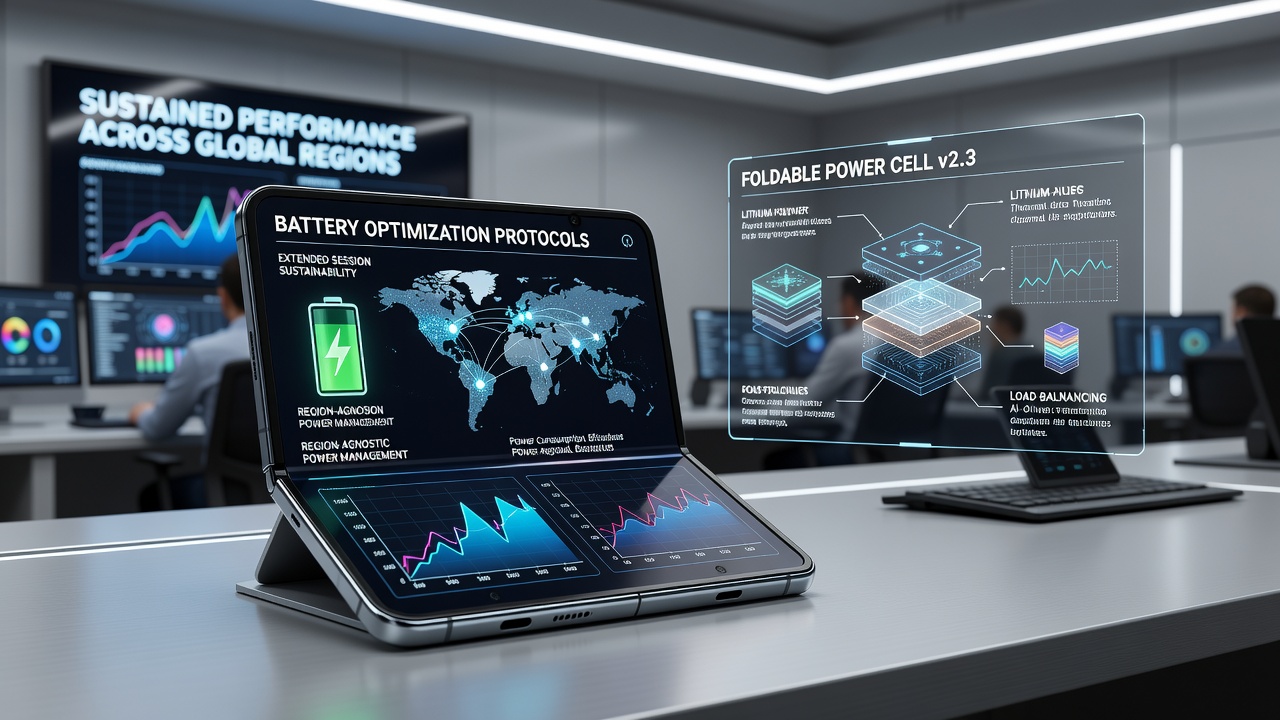
Hardware sensors embedded in hinge mechanisms detect folding states and feed data into power profiles that shift rendering duties between screens, and this integration reduces total system load when users switch to single-screen mode during travel. Industry analyses from the Entertainment Software Association indicate foldable models released before August 2026 achieved measurable gains after firmware updates that aligned thermal throttling curves with network jitter statistics. Software stacks further employ sleep-state transitions for wireless modules during stable connections, cutting leakage current while preserving the ability to rejoin sessions instantly upon region server acknowledgments.
Performance Outcomes in Extended Play
Studies compiled by GSMA in 2026 tracked thousands of devices and found average battery retention improved by 18 percent when protocols incorporated region-specific latency profiles into their decision trees. Users in locked environments often encountered higher ping variability, prompting the systems to activate burst-mode charging inhibitors that prevented heat buildup during simultaneous gameplay and background syncing. These adjustments maintained consistent performance across titles requiring constant server polling, and field reports confirmed fewer instances of thermal shutdowns compared with earlier hardware generations lacking such coordinated controls.
Conclusion
Battery optimization protocols in foldable handhelds continue to evolve through coordinated hardware and software refinements that address the unique demands of region-locked multiplayer networks. Data collected through 2026 demonstrates sustained session lengths when systems balance display, processor, and connectivity loads in response to real-time conditions. Ongoing refinements focus on expanding predictive capabilities and refining cross-band transitions to support longer uninterrupted play periods worldwide.