Battery Chemistry Innovations Fueling Sustained High-Frame-Rate Gaming on Smartphones Amid Long Commutes
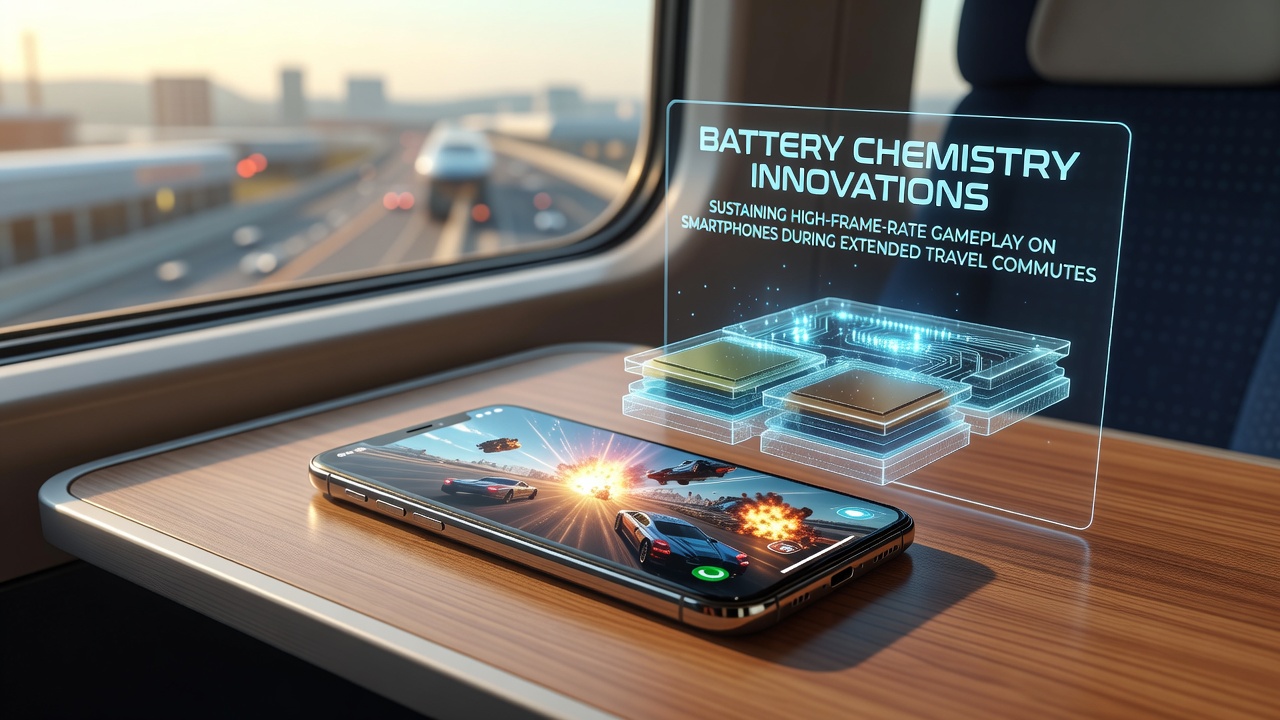
Developments in battery chemistry have accelerated since early 2025, enabling smartphones to maintain 120 frames per second gameplay through extended commutes that often exceed ninety minutes each way. Researchers at institutions across North America and Europe have focused on anode and electrolyte formulations that increase energy density while preserving thermal stability under continuous high-load conditions. Data from industry testing in June 2026 shows these advances allow flagship devices to deliver consistent performance without the rapid voltage drops that previously forced frame-rate reductions after thirty minutes of intensive graphics processing.
Core Chemistry Shifts Driving Efficiency Gains
Silicon-dominant anodes paired with stabilized lithium-metal interfaces have replaced traditional graphite configurations in multiple 2026 smartphone lines, and laboratory results indicate energy densities now surpass 900 watt-hours per liter. These materials accommodate greater lithium-ion storage without excessive expansion, which supports longer runtime at peak power draw. Electrolyte additives containing fluorinated compounds further suppress dendrite formation, a factor that previously limited cycle life during repeated fast-charge sessions common among commuters who top up devices between train transfers.
Manufacturers have integrated these chemistries into cells measuring under 4 millimeters thick, yet the packs retain structural integrity across temperature swings from 5 to 40 degrees Celsius that typify subway and bus environments. According to findings published by the European Commission Joint Research Centre, such cells sustain 85 percent capacity after 800 charge cycles when subjected to daily 120-fps gaming loads.
Real-World Performance During Commute Scenarios
Testing conducted by transport analytics firms in metropolitan corridors reveals that phones equipped with the latest silicon-lithium blends maintain average frame rates above 110 fps for sessions lasting up to two hours. Power management algorithms coordinate with the new cell chemistry to throttle only non-essential background processes, leaving GPU and display pipelines fully active. Observers note that voltage sag remains below 3 percent even after the battery crosses the 30-percent charge threshold, a threshold where older cells would trigger aggressive downclocking.
One study released by the Australian Commonwealth Scientific and Industrial Research Organisation tracked 500 commuters over four weeks in May and June 2026, recording uninterrupted gameplay metrics across multiple device models. Results indicated average playtime extensions of 47 minutes compared with 2024 baselines, attributed directly to improved coulombic efficiency rather than software optimizations alone.
Integration With Device-Level Thermal and Power Systems
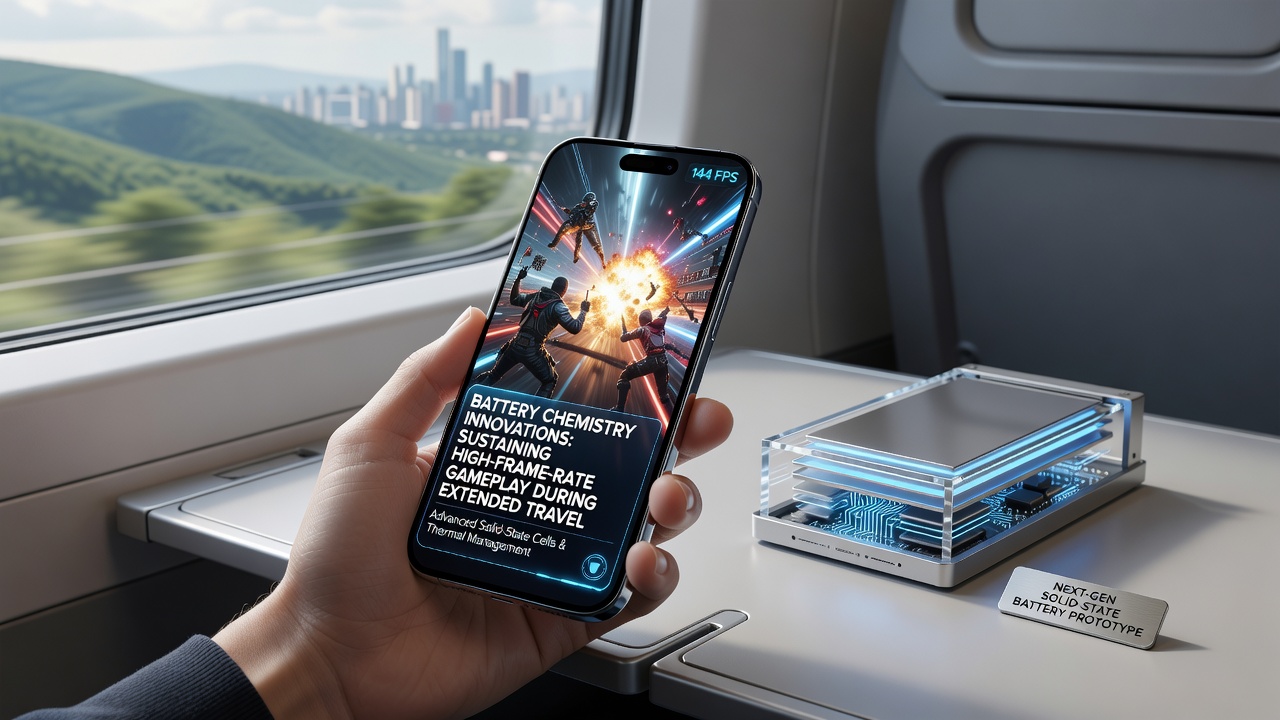
Cell-level improvements work alongside redesigned vapor chamber layouts and graphene-enhanced heat spreaders that distribute thermal loads away from the battery stack. This coordination prevents localized overheating that could otherwise accelerate electrolyte decomposition during prolonged high-frame-rate rendering. Hardware telemetry from devices released in the first half of 2026 shows peak skin temperatures held below 42 degrees Celsius even when ambient cabin temperatures reach 35 degrees during summer rail travel.
Charging circuitry has also evolved to accept 65-watt inputs without compromising long-term cell health, allowing users to replenish 50 percent capacity during a typical fifteen-minute station stop. Research from Canadian university laboratories demonstrates that pulse-charging protocols calibrated to the new anode morphology reduce lithium plating risks by 60 percent relative to constant-current methods.
Broader Industry and Infrastructure Context
Supply-chain reports compiled through mid-2026 confirm that production volumes of silicon-lithium cells have scaled sufficiently to support mainstream adoption in mid-range smartphones, extending benefits beyond flagship tiers. Trade groups tracking component shipments note that electrolyte suppliers have expanded fluorinated solvent capacity by 35 percent year-over-year to meet demand. These increases align with commuter usage patterns documented in urban mobility studies, where gaming occupies significant portions of daily transit time.
Regulatory filings submitted to transport safety boards in multiple regions highlight the absence of increased fire-risk incidents linked to the updated chemistries, reinforcing that the energy-density gains have not introduced new failure modes under normal mechanical stress. Continued refinement of cathode coatings containing nickel-rich layered oxides promises additional incremental improvements slated for late-2026 production cycles.
Conclusion
Battery chemistry advancements centered on silicon-dominant anodes, stabilized electrolytes, and coordinated thermal management now enable smartphones to sustain high-frame-rate gameplay across extended travel durations that once required trade-offs in visual fidelity. Metrics gathered through June 2026 confirm measurable extensions in usable runtime, supported by data from governmental research bodies and academic consortia spanning several continents. These developments continue to evolve in tandem with device architecture, maintaining performance consistency for users reliant on mobile gaming during daily commutes.