Adaptive Audio Layering in Cloud Streaming: How Per-Device Sound Profiles Reduce Viewer Drop-Off During Extended Esports Broadcasts
Mara Baumann · Jun 11, 2026
Adaptive Audio Layering in Cloud Streaming: How Per-Device Sound Profiles Reduce Viewer Drop-Off During Extended Esports Broadcasts
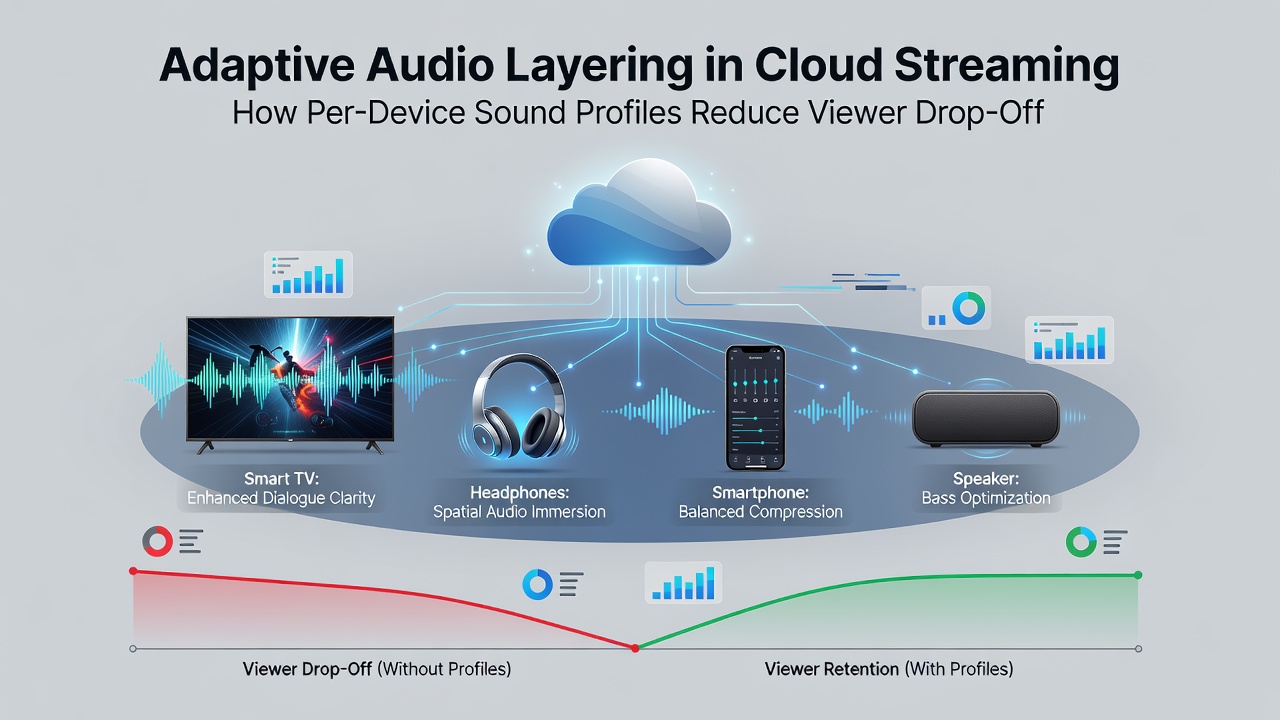
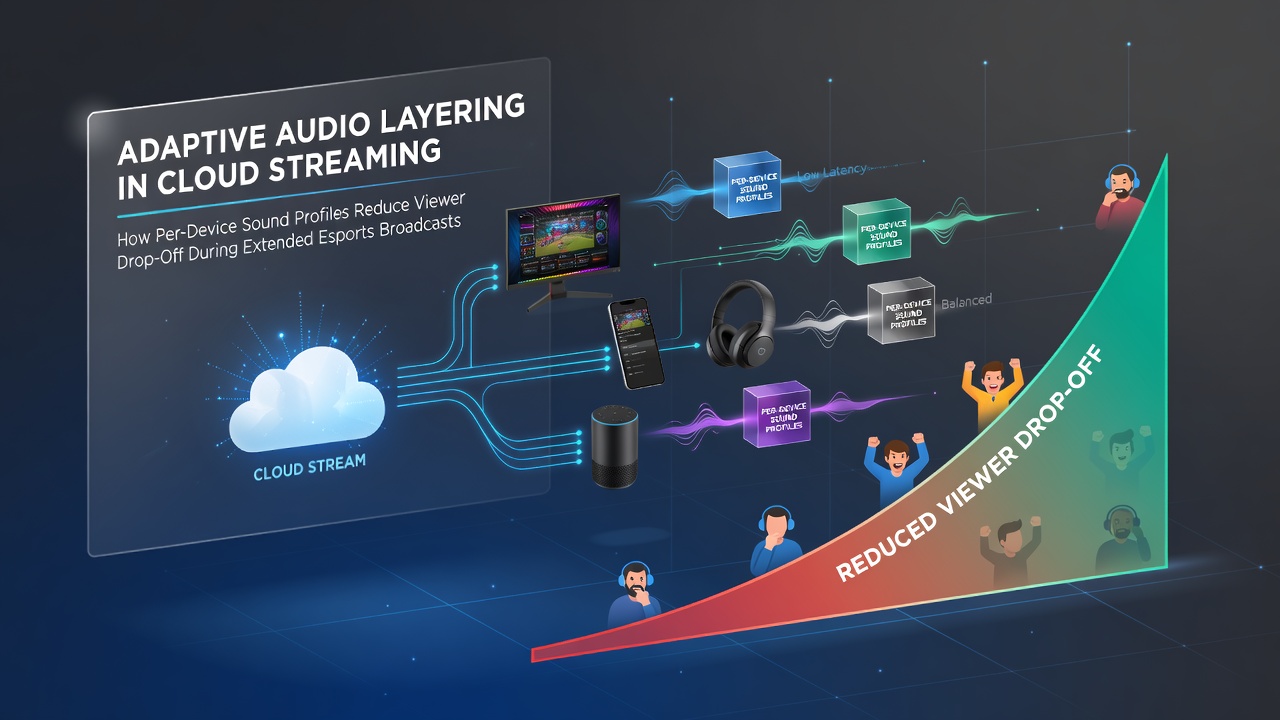
Broadcasters have integrated adaptive audio layering into cloud streaming platforms to address viewer retention challenges that arise during extended esports events lasting several hours or more. This approach processes audio streams dynamically based on device specifications while delivering layered sound elements such as commentary, game effects, and ambient crowd noise through separate channels that adjust in real time. Per-device sound profiles form the core mechanism where each viewer endpoint receives tailored audio adjustments according to hardware capabilities including speaker configurations, headphone impedance, and processing power. Data from platform logs in June 2026 indicated that these profiles correlated with measurable decreases in session terminations as viewers maintained engagement through tournament finals that extended beyond typical durations.Mechanics of Audio Layering in Cloud Environments
Cloud servers segment incoming game audio into independent layers before transmission and then recombine them at the client side using device-specific parameters. Engineers at streaming providers noted that this separation allows for selective volume scaling and frequency filtering without requiring full re-encoding of the entire mix for every user connection. Observers documented that mobile devices often receive compressed high-frequency ranges to compensate for smaller speakers while desktop setups preserve full dynamic range across all layers. Synchronization protocols ensure that audio layers align with video frames even when network conditions fluctuate during peak viewership periods.Impact on Viewer Retention Metrics
Analyses of broadcast sessions revealed that adaptive profiles contributed to sustained viewing times in events exceeding four hours where drop-off rates previously climbed sharply after the third hour. Platform telemetry showed reduced instances of audio-related exits such as complaints about muddled dialogue or overwhelming background sounds that prompted users to abandon streams. Research from the Australian Centre for Gaming Studies tracked retention patterns across multiple tournaments and found that devices with customized profiles maintained higher completion rates compared to uniform audio delivery methods. Those who studied the implementations observed that personalization addressed variations in listening environments from quiet rooms to noisy public spaces where mobile viewers participated.